
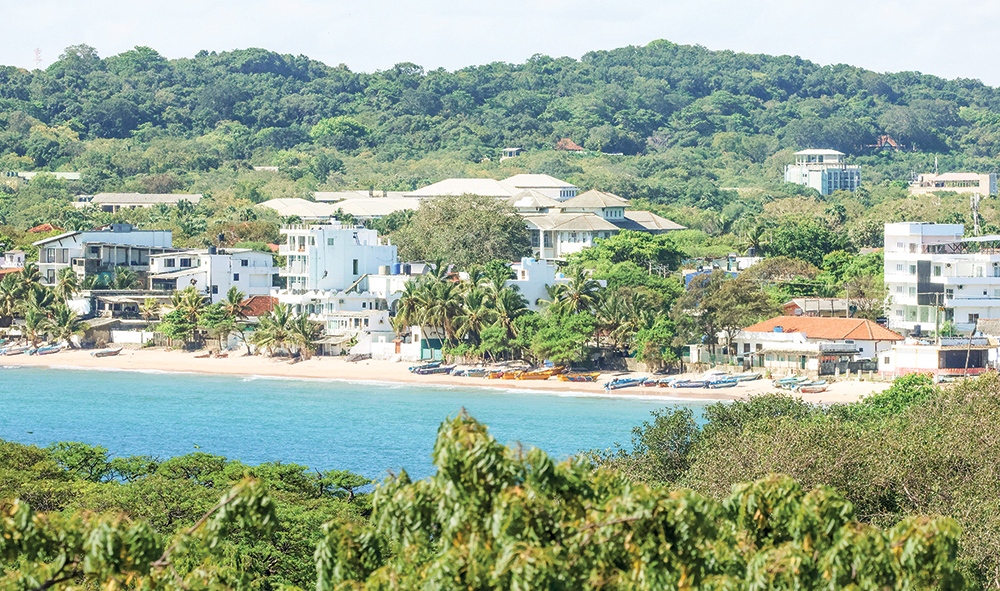

Sri Lanka could unlock a powerful new economic pathway by integrating biodiversity, archaeology and cultural heritage into a single conservation-driven tourism model, according to author, banker and naturalist Gehan de Silva Wijeyeratne.
Speaking to The Island, de Silva Wijeyeratne said the country possesses a rare convergence of natural and historical assets that, if strategically presented, could reposition Sri Lanka as a leading global destination for nature and heritage tourism.
“At the moment, these elements exist, but they are not fully connected,” he said. “What Sri Lanka has is extraordinary—a complete story of life, from ancient history to modern biodiversity. The opportunity is to bring that together in a way that creates value.”
His remarks come at a time when policymakers are seeking sustainable avenues to revive the economy, with tourism identified as a key growth sector. De Silva Wijeyeratne is currently researching his next book, ‘Enchanting Sri Lanka’ to be published by John Beaufoy Publishing in the UK.
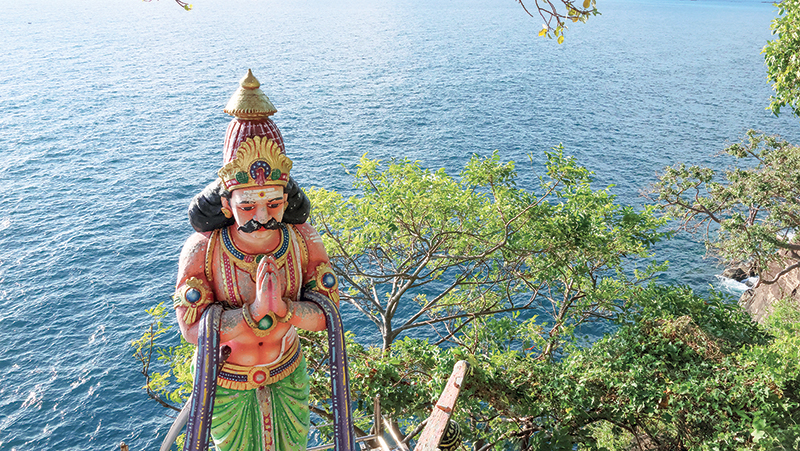
Koneswaram Temple Trincomalee
He said his recent field visit reinforced the untapped potential of integrated landscapes—particularly in the eastern region around Trincomalee.
He spent four days in Trincomalee with Hiran and Hashan Coory, two members of the senior leadership in Jetwing Hotels. Commenting on the visit, he said “Within a short distance, you have forests, marine ecosystems, archaeological sites and protected areas. This is not about isolated attractions—it’s about creating a connected experience that can compete globally.”
He noted that such an approach could continue to transform Sri Lanka’s tourism model beyond traditional beach-centric travel. “You can offer visitors wildlife, marine biodiversity and ancient history in a single journey,” he said. “That’s a very powerful proposition.”
Speaking more on Trincomalee’s potential, he said the combination of ancient history, the more recent colonial history and buildings, the beautiful beaches and coves, the snorkelling and marine mammal watching combined with the potential to create a huge national park that will have large mammals on the doorstep of the city means Trincomalee can become the city with the greatest tourism potential of any city in Sri Lanka.
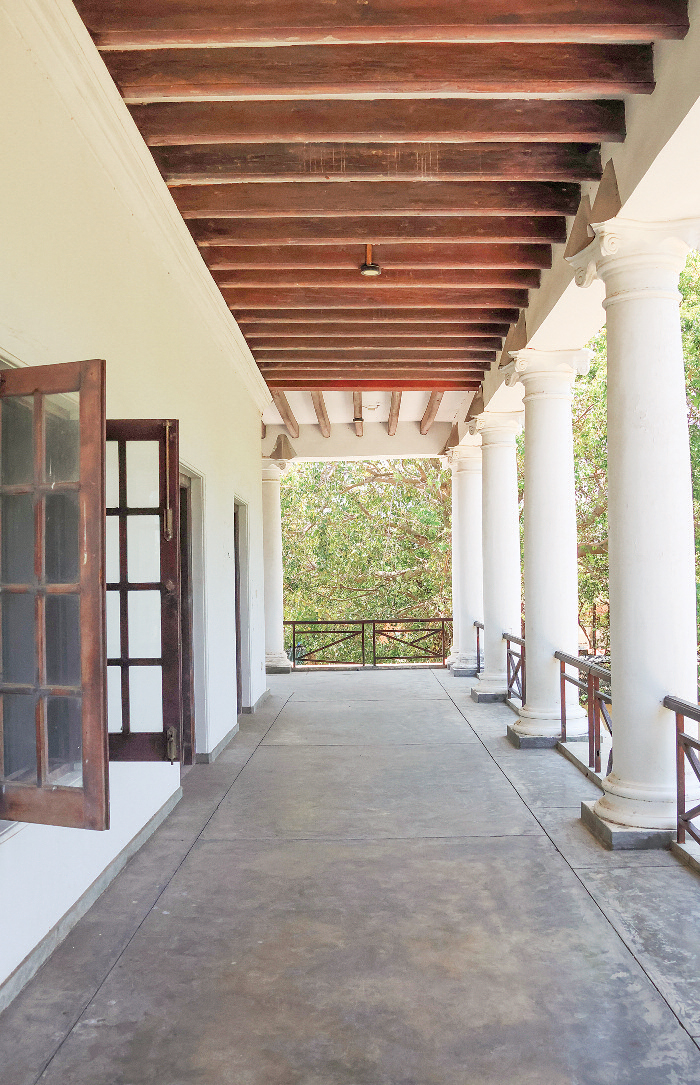
Maritime and Naval History Museum Trincomalee
“A vast national park on the scale of better-known parks such as Wilpattu and Yala can be created by connecting the forest reserves which stretch from Kantalai and through to the Naval Headworks Sanctuary, almost to the borders of the Trincomalee town” he says. “A new national park could be constructed with a network of safari roads and water holes and grass plains to increase the prey density for iconic mammals like the leopard. Trincomalee can then become a top land safari destination with an entrance gate to a national park just 15 minutes drive from the town. No other city will be able to rival it for land safaris, marine safaris, ancient and colonial history, staggering views and beaches and the heady mix of various ethnic groups with their religious beliefs, cuisine and arts. Trincomalee could overshadow every other city in Sri Lanka for tourism if developed properly”.
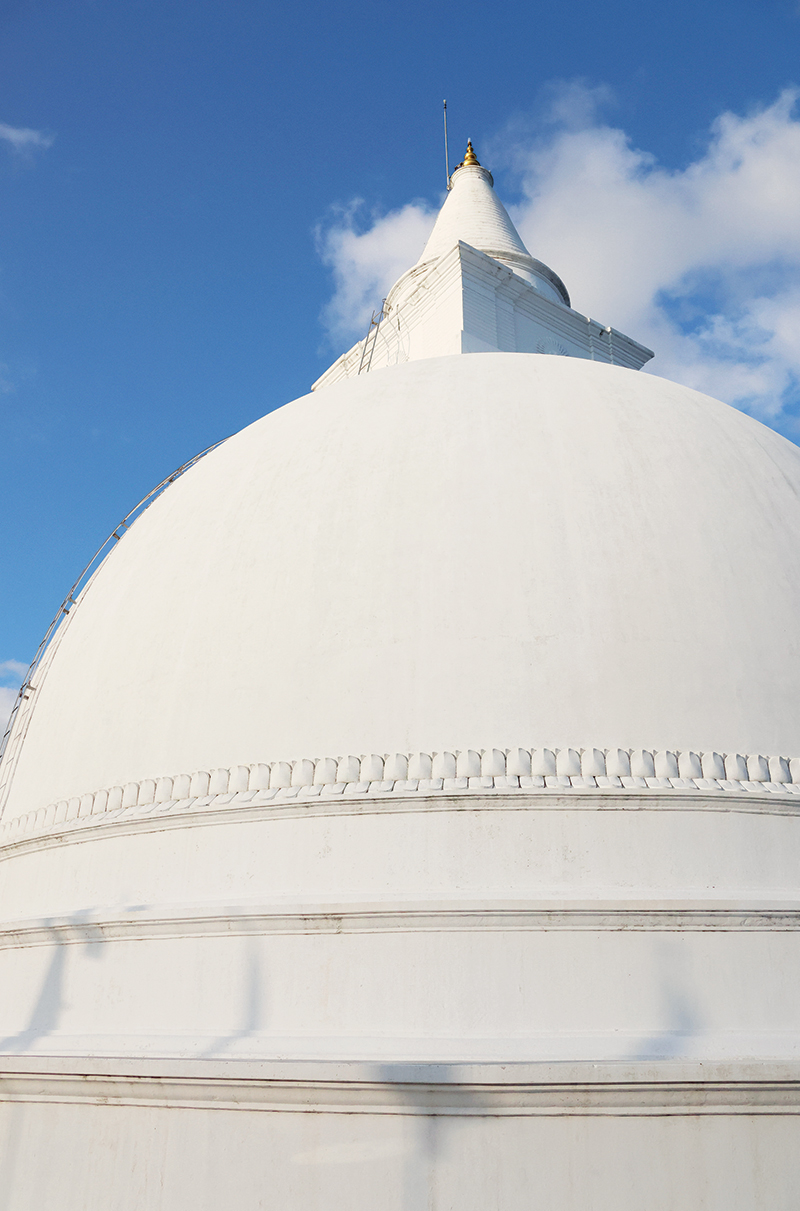
Velgam Vehera
De Silva Wijeyeratne emphasised that conservation must be positioned not as a constraint, but as an economic enabler. “If you encourage and enable responsible visitation, it brings revenues to these areas,” he said. “That supports conservation and also creates livelihoods for local communities.”
However, he cautioned that development must be carefully managed to avoid damaging sensitive ecosystems. “You need development that is sensitive to these landscapes and the proper infrastructure to manage visitation,” he said. “The value lies in preserving what is already there.”
In addition to tourism, de Silva Wijeyeratne highlighted the need to strengthen Sri Lanka’s conservation capacity through international collaboration. He has proposed the introduction of a special visa to attract experienced global conservationists willing to work on a voluntary basis.
He referenced his article ‘A visa for bringing in expertise and expanding tourism’ which was published in The Island on Friday, 23 May, 2025, and is available online. In this he proposes a special visa to address four strands – volunteering, internships, academic exchange and short term study. The idea is that the visa should be as easy as to obtain an online tourist visa, but the visitor can now apply for a longer term visa for a declared purpose, such as volunteering.
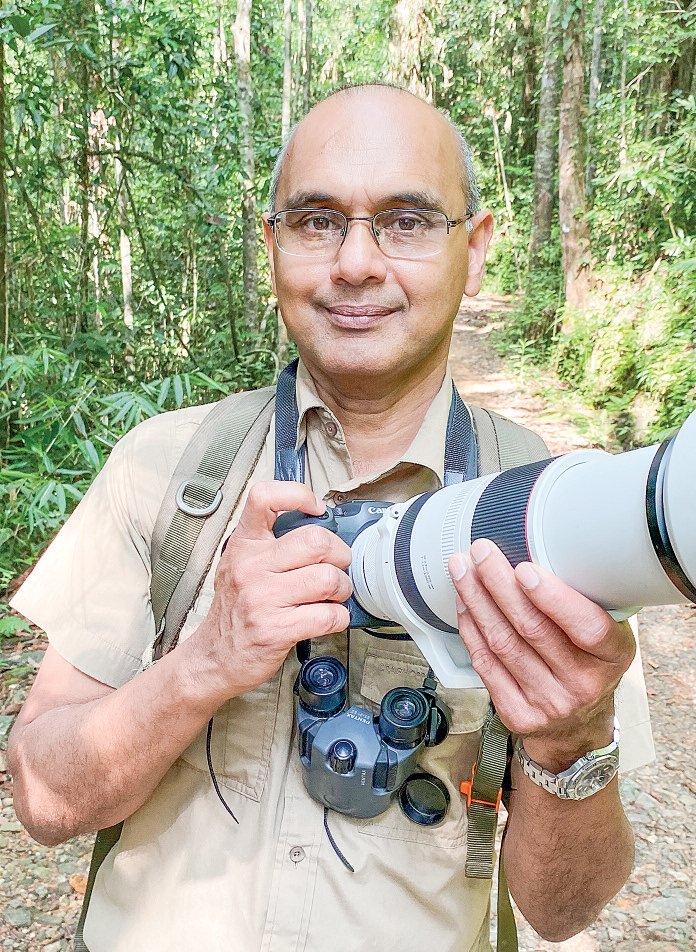
Gehan de Silva Wijeyeratne
He was careful to emphasise that the proposed visa is not for paid work and does not give the visitor special rights, and any relevant permits and permission need be obtained by the local partner. “There are people with 30 or 40 years of experience in research and conservation who would gladly come to Sri Lanka and contribute” he said. “If we create a proper framework, they can work with local organisations, share knowledge and build expertise.” Such a system, he stressed, would not undermine local employment. “These are unpaid roles—they are not taking jobs away. Furthermore, they will help locals to upskill,” he said. “They are helping to strengthen the system.”
De Silva Wijeyeratne also underscored the importance of science communication in driving conservation outcomes. Drawing from his recent lecture to the Wildlife and Nature Protection Society, he said public understanding of biodiversity remains limited, particularly when it comes to foundational elements, such as plant life. “In my recent lecture I started with plants because they are often overlooked,” he said. “In Sri Lanka we have the descendants of ancient plant groups, like lycophytes and bryophytes, as well as an abundance of the relatively more modern flowering plants (or angiosperms). They all form the basis of all ecosystems.” Sri Lankan researchers would benefit from international collaborations to describe and study the ecology of species found in Sri Lanka. As an example of the gaps in our knowledge, he pointed that it is hard to find online even a species inventory of Sri Lankan species of Lycophytes.
He further highlighted the interconnected nature of life, pointing to the role of microscopic organisms. “Every cell in our body contains mitochondria, and that DNA originated from bacteria,” he said. “So we are, in a sense, composite organisms built on ancient biological relationships. “This perspective, he said, is critical to fostering a deeper appreciation of biodiversity and the need for its conservation. “If people understand how interconnected life is, they begin to value it differently,” he said.
De Silva Wijeyeratne’s ongoing research for ‘Enchanting Sri Lanka,’ to be published by John Beaufoy Publishing, also touches on Sri Lanka’s layered history, including its colonial past. During his recent visit to Trincomalee, he visited the grave of Rear Admiral Charles Austen, the brother of renowned novelist Jane Austen. “I read in the Bradt Guide to Sri Lanka that her brother was buried in the Esplanade Cemetery. There was an article online by Nishan Fernando in the Sunday Times where he describes how, in 1984, he and his father, Admiral Clancy Fernando, located the grave. Fernando wrote of the burial ground on the Esplanade in the middle of Trincomalee town, opposite the beautiful horseshoe shaped Dutch Bay.”
After a false start at another cemetery, using Google maps, de Silva Wijeyeratne with others, including Hiran and Hashan Cooray, some of the senior team from Jetwing Hotels, visited St. Stephan Cemetery which is around 400 meters from the Maritime and Naval History Museum. ‘We found the grave as described in the Sunday Times article by Nishan Fernando. But talking to various hoteliers and people in tourism in Trincomalee, we were struck by how many people were unaware of its existence. Hopefully, knowing that the grave of Rear Admiral Charles Austen, brother of Jane Austen, is roughly in the middle of St. Stephan Cemetery, in Trincomalee, will help others, with an interest in Jane Austen, to locate it.”
During his time in Trincomalee, with the Jetwing Hotels team, de Silva Wijeyeratne also visited Mederigiriya, Seruwila and Velgam Vehera. They encountered elephants on their visits to Seruwila and Velgam Vehera. “That brief visit alone shows how rich and complex Sri Lanka’s story is,” he said. “It spans pre-colonial, colonial and post-colonial periods.” For de Silva Wijeyeratne, the challenge now lies in translating this richness into a coherent national narrative. “This country has everything—biodiversity, ancient civilisation, marine ecosystems, etc.,” he said. “Few places in the world can offer such an all-round package.”
He stressed that aligning conservation with tourism and knowledge-sharing could deliver long-term benefits. “It’s about connecting the dots,” he said. “If we do that successfully, Sri Lanka can position itself as a world-class destination, while protecting its natural and cultural heritage.” As the country looks to rebuild and diversify its economy, de Silva Wijeyeratne’s message is clear: Conservation, when strategically integrated, could become one of Sri Lanka’s strongest assets. (Pictures courtesy Gehan de Silva) Wijeyeratne
By Ifham Nizam