
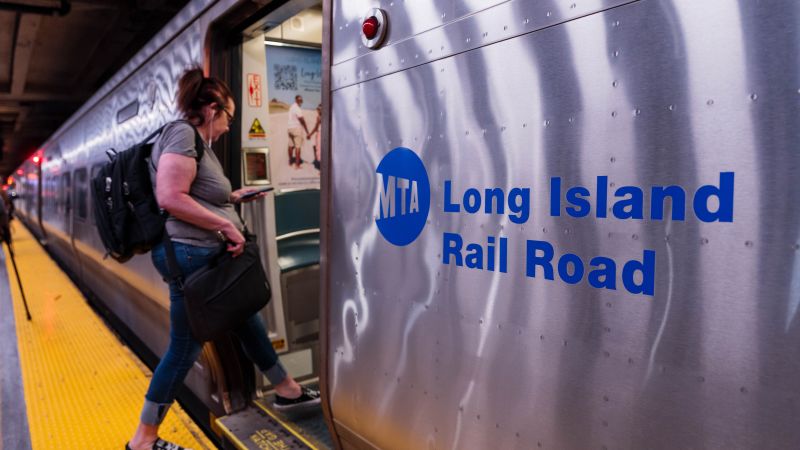

Transit workers for the Long Island Rail Road, the nation’s largest commuter railroad, are on strike, potentially stranding hundreds of thousands of weekday passengers in the New York City area.
The strike by the five unions representing 3,500 workers, the first at the railroad since 1994, brought all train traffic to a halt. The unions failed to reach a deal with railroad management on wages and work rules on Friday.
“After two days of round-the-clock negotiations, parties were unable to reach a deal,” said Kevin Sexton, vice president of the Brotherhood of Locomotive Engineers and Trainmen, and spokesperson for the unions.
Commuters now face the prospect of having to drive to work at a time when high gas prices have surged and new extra tolls are in place on all cars entering Manhattan’s business district.
The unions are seeking the first raise for their members since 2022, a period that saw some of the highest cost-of-living increases in decades in one of the nation’s most expensive markets.
While the strike started at 12:01 a.m. ET on Saturday, it will be most severely felt on Monday when nearly 300,000 commuters make their way in and out of the city. The Metropolitan Transportation Authority, which operates the railroad, said Friday afternoon that the limited bus service it will offer can accommodate only about 13,000 riders in the morning and another 13,000 in the evening.
The MTA is urging customers to work from home, avoid non-essential travel and give extra time no matter what form of transportation they take into the city.
While weekends have far fewer passengers than weekdays, this weekend can expect an uptick in off-peak service. The Mets and the Yankees, New York’s two baseball teams, play each other Saturday and Sunday at the Mets’ Citi Field, which is served by the LIRR.
Railroads operate under a different labor law than most businesses in the country, one that makes it more difficult for unions to go on strike. But the barriers in the law to limit strikes — mediation, cooling off periods and government panels considering bargaining positions — have all been cleared by the unions. And there is little left that could get the workers back on the job other than a labor deal acceptable to rank-and-file members.
Congress can intervene to broker a deal, as it did in December 2022, when it prevented a national freight railroad strike because it posed a threat to the national economy.
But the nation’s largest commuter railroad doesn’t pose the same risk to the economy as the freight railroads. And Congress didn’t act in 2025 when the engineers’ union at New Jersey Transit, which had 100,000 daily commuters, went on strike for three days.