
It seems that Denver has reached a golden age for Mexican cuisine.
For decades, we’ve celebrated our “Den-Mex” heritage with never-ending debates over who serves the best green chile. But a new generation of chefs and restaurant owners are introducing the ingredients, techniques and dishes they grew up with in their native Mexico without first passing the food through an American filter. In doing so, they are elevating the conversation to new heights.
There’s Johnny and Kasie Curiel’s Michelin-starred empire of Alma Fonda Fina, Mezcalaria Alma and the newly opened Milpero (among others). Erasmo Casiano brought us Lucina Eatery & Bar in 2022, and followed up with Xiquita Restaurante y Bar in 2024. Other innovators include La Diabla Pozole y Mezcal, Molino Chido, Carne and more.
Joining this list of restaurants striving to raise the bar for Mexican cuisine is the newly opened El Tule in Belleview Station. Its namesake is the legendary El Árbol del Tule tree located just outside the city of Oaxaca, known for having the widest trunk in the world. So it’s fitting that the restaurant is an ode to that city’s iconic food tradition.
“My dad grew up in Oaxaca,” says owner Luis Carlos Alvarado. “I have my cousins and my aunt still living there. So we go, like, twice a year. The food from Oaxaca is the best food in Mexico. I’ve been to pretty much all of Mexico, and the food from Oaxaca is just top notch.”
At El Tule, you’ll find nods to Oaxaca throughout the menu, including a line of moles that Alvarado boasts will “taste better than the ones you had there.”
That’s an incredibly bold statement. And while I can’t say El Tule’s moles are necessarily better than the ones I had in Oaxaca, they absolutely live up to the standard set there.
The flautas de pollo appetizer, for instance, features a red mole coloradito smothering a slow-cooked Oaxacan chicken picadillo. The coloradito is a complex yet subtle mole that delivers just the right balance of heat, tartness and earthiness, making it a standout among the famous “seven moles of Oaxaca.”
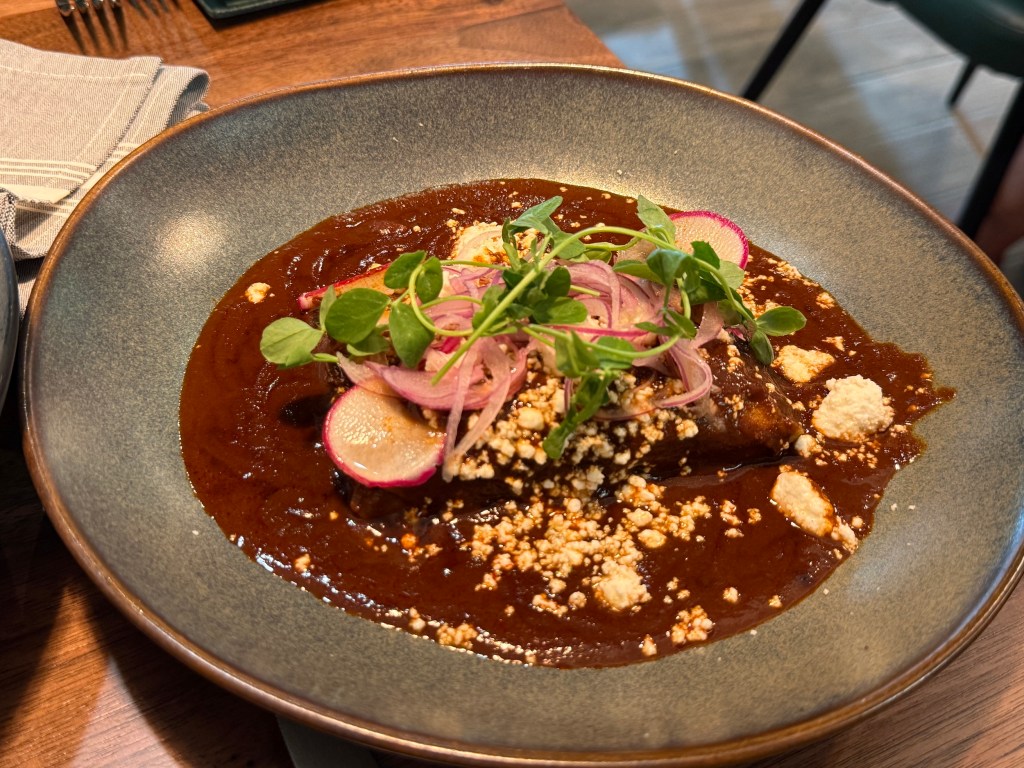
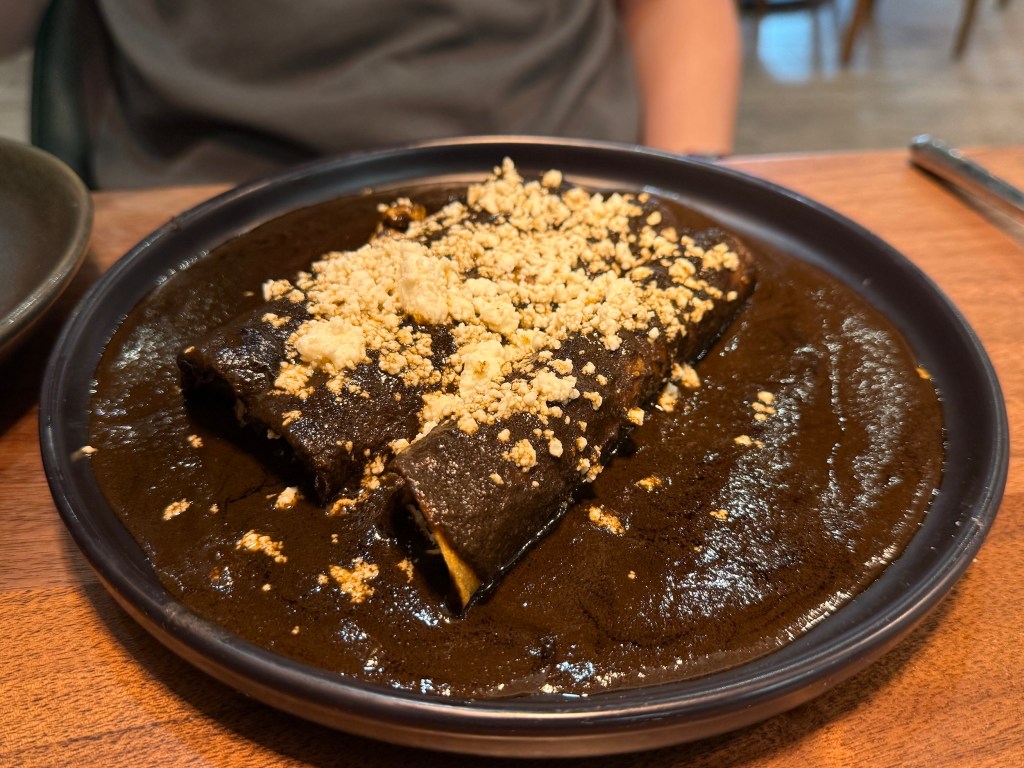
For those who prefer a mole negro, the enmoladas Oaxaquenas entree is a similar dish of slow-cooked chicken served enchalada style, smothered in the oil-black sauce. El Tule’s version is notably less bitter than the equivalent I had in Oaxaca, but avoids being overly sweet thanks to a healthy kick of heat, which helps cover up the slightly dry chicken inside.
There’s also a vegetarian cheese enmolada featuring a sweet mole over a panela cheese. Alvarado says he hopes to add a green mole soon, but at the moment he can’t get the exact ingredients he needs to make that happen.
“We buy peppers from Mexico,” he says. “A lot of restaurants use peppers from China without even them knowing, so it changes the flavor a lot. We’re trying to get the ingredients for the green mole, but it’s hard.”
Alvarado is kind of a stickler for details. Some might even say that he’s stubborn. If he wants something done a certain way, he has no problem taking the time (and expense) needed to get what he wants.
A fitting allegory here is the restaurant’s signature design element: a huge tree meant to pay homage to the eponymous El Tule tree. Upon first walking into the empty, 2,800-square-foot space that would become his restaurant, he immediately hated the large concrete column at the entrance and sought a way to disguise it as a tree.
This turned out to be the biggest headache of the project, requiring a custom build with very specific materials dictated by the fire department, drop sprinklers hanging from the ceiling below the faux leaves, and many, many inspections.
“I wanted the tree,” Alvarado shrugs. “The fire department kept denying us a permit, and construction was a standstill for two months because we still couldn’t get the permit for the tree. But we were willing to wait to be able to make this happen.”
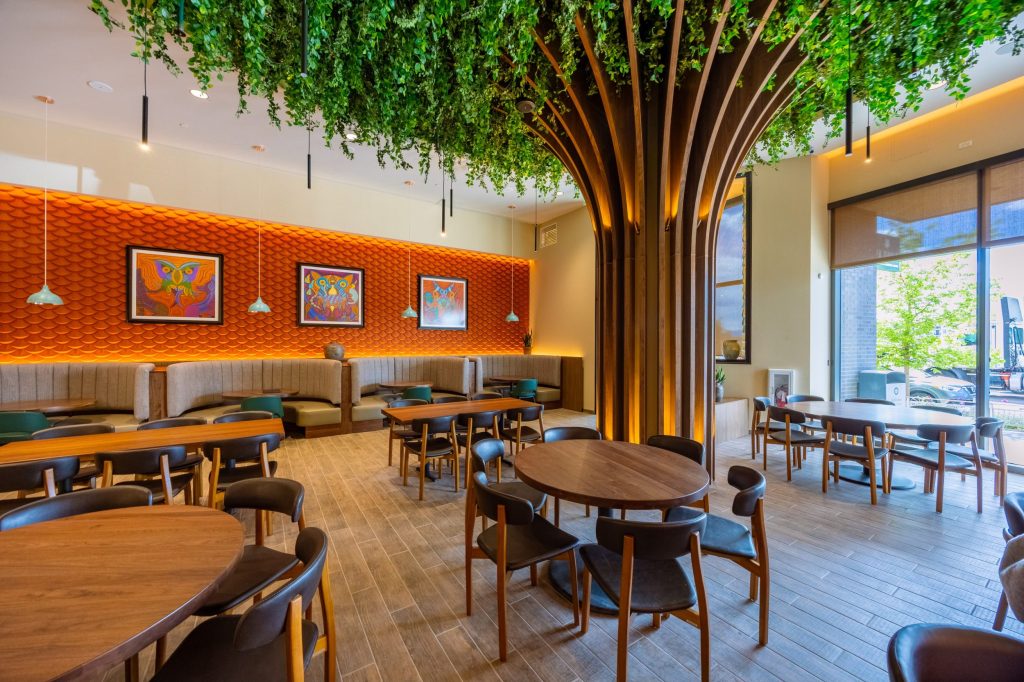
The result is a stunning spectacle that’s more than just a focal point: The tree is the standard bearer for a design aesthetic that extends throughout the space, exuding elegance and attention to detail in a way that demands admiration. It’s no surprise that the Denver Architecture Foundation has chosen to hold a walking tour of the restaurant later this week.
The walls are terra-cotta-dyed concrete tiles made in Mexico that look like scales, individually set along the walls above elegantly upholstered booths. Intricate Zapotec folk art is featured throughout, from original paintings by famed artists Jacobo & Maria Angeles to large painted alebrije figurines on the shelves above the green-tiled bar.
Everything from the space to the tie-clad servers is part of Alvarado’s desire to deliver not only an authentic Mexican fine dining menu, but also the style of service and hospitality he’s come to expect.
“In Mexico, I feel like a lot of places are more high-end and the customer service is way better, so people from there have really high expectations going into every restaurant,” he says. “Here, it’s really different.”
Alvardo comes from a family that has run the Akari Franchises chain of high-end Japanese restaurants found across Mexico for three decades; he started working in the family business at 13. Originally from Chihuahua, he moved to El Paso in high school,and briefly lived in Minneapolis, where he discovered how bad Mexican food in America can be.
After moving to Denver four years ago to be closer to the mountains, he decided to use his lifetime of experience operating Japanese restaurants in Mexico to open a Mexican restaurant in the U.S.
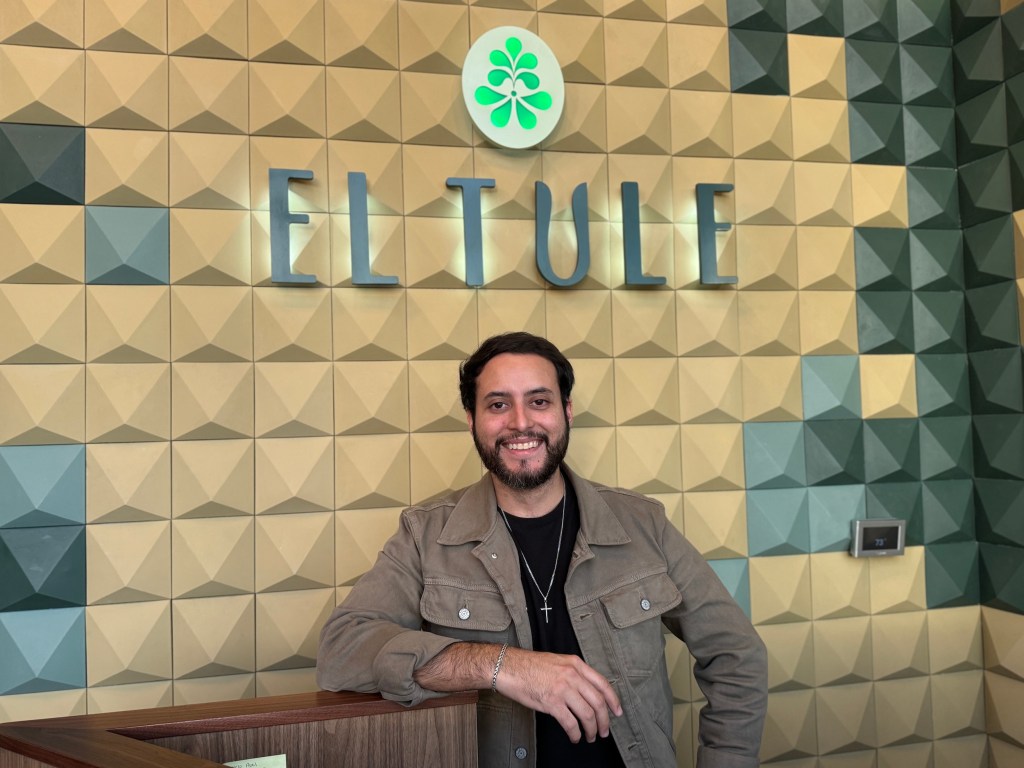
“When I was in Minneapolis, all the Mexican food there was awful, like the worst I’ve had in my life,” he says. “But it was always full of people, and all I could think of was, ‘They don’t know what real Mexican food is.’ So that’s when I decided to open a Mexican restaurant instead of a Japanese one, so I could tell people, teach people what authentic Mexican food is really like.”
At El Tule, he brings the operational attention to detail that he learned in the family restaurants back home. The recipes were developed in Oaxaca first, then provided to the Denver kitchen staff with specifics dictated “to the gram,” he says.
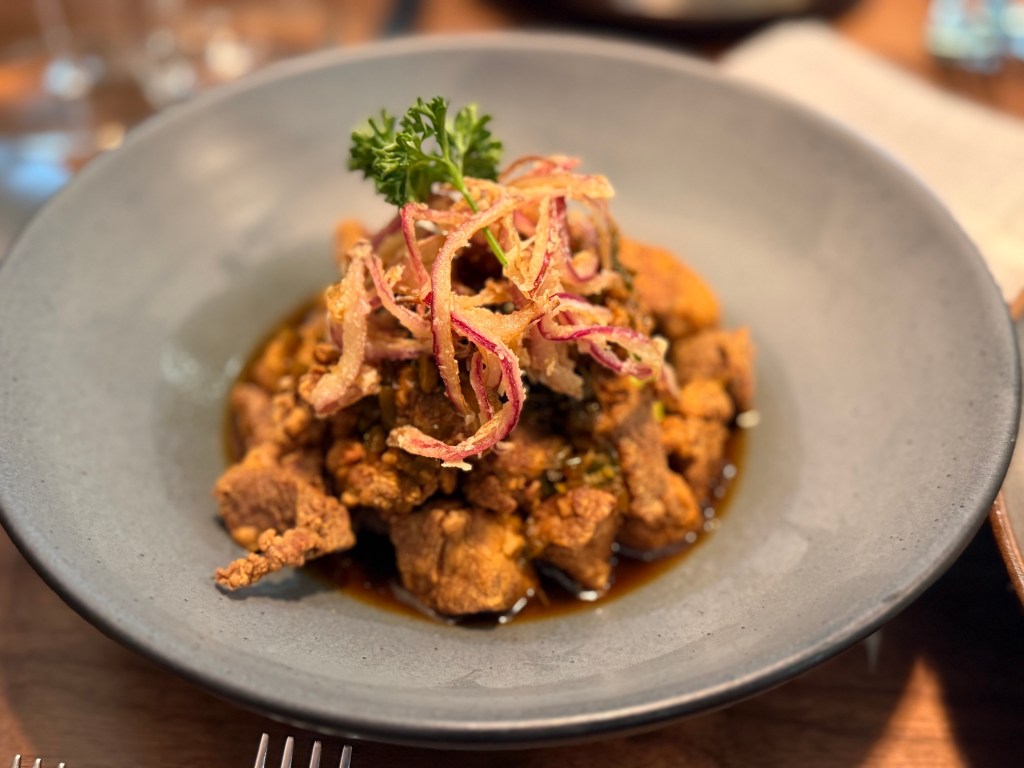
The result is a mostly well-executed menu that was raising eyebrows just days after opening. In addition to the moles, also worth checking out is the chicharrón de filete, a fried pork tenderloin in a soy-citrus salsa negra over guacamole that is tender and crispy at the same time.
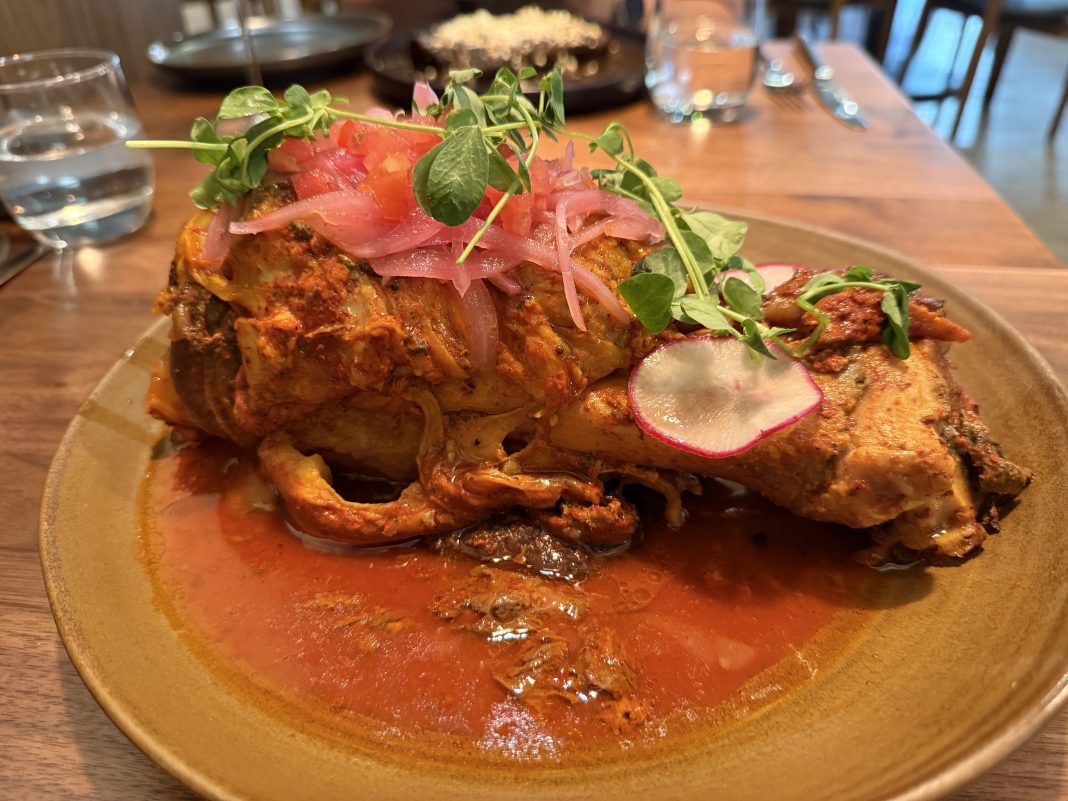
And if you really want a scene-stealer, don’t miss the cochinita pibil, a slow-cooked, spice-laden pork shank served whole on the bone. It’s enough for the entire table to enjoy, pulling shreds of falling-off-the-bone meat with just a fork, sopping up all the drippings and juices with a house-made corn tortilla. This dish is decadently glorious.
The restaurant hasn’t launched its website yet because the menu is still expanding. Soon, Alvarado hopes to add more seafood, such as a half octopus, halibut and oysters. He also wants to bring in more Mexican wine, but again is waiting to get distribution set up for just the right bottles he wants, which might take six months.
At the moment, it won’t take months to score a reservation at this under-the-radar spot. But that will change once diners get wise to the food being served, particularly residents of an area starved for a more diverse selection of high-end options that don’t require a trip up I-70.
El Tule is located at 4862 S. Newport St. and is open from 11 a.m. to 10 p.m. Monday through Thursday, 11 a.m. to 11 p.m. on Friday, 9 a.m. to 11 p.m. on Saturday, and 9 a.m. to 9 p.m. on Sunday. For more information, visit eltulemex.com when the site goes live.