
The administration’s legal position has drawn criticism internationally
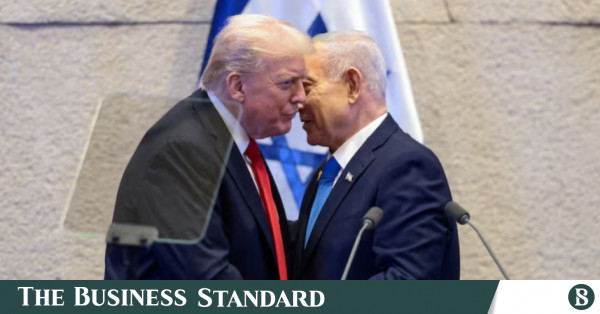
US President Donald Trump and Israeli Prime Minister Benjamin Netanyahu stand at the Knesset on the day Trump addresses it, amid a US-brokered prisoner-hostage swap and ceasefire deal between Israel and Hamas, in Jerusalem, 13 October 2025. Photo: REUTERS/Evelyn Hockstein/Pool
“>

US President Donald Trump and Israeli Prime Minister Benjamin Netanyahu stand at the Knesset on the day Trump addresses it, amid a US-brokered prisoner-hostage swap and ceasefire deal between Israel and Hamas, in Jerusalem, 13 October 2025. Photo: REUTERS/Evelyn Hockstein/Pool
The United States set out its legal justification for military action against Iran last week, describing the campaign as an act of self-defence, while facing criticism from legal experts and pressure at home over congressional approval.
Al Jazeera reports that in arguments presented on 24 April 2026, State Department legal adviser Reed Rubinstein said the military action was intended to protect both the United States and its ally, Israel. He characterised the operation as an act of “self-defence”.
Rubinstein argued the campaign did not constitute a new war but was instead a continuation of long-standing hostilities, pointing to decades of what he described as “malign aggression” by Iran as the basis for the strikes. He added that Washington was exercising its inherent right to self-defence and acting at Israel’s request for “collective self-defence”.

The administration’s legal position has drawn criticism internationally. Legal experts say the military action is likely inconsistent with the UN Charter, which permits the use of force only when authorised by the Security Council or in cases of clear self-defence. Critics argue the justification lacks sufficient evidence and is widely viewed as action taken on Israel’s behalf.
At home, the administration also faces legal constraints. Under the War Powers Act, it had until 1 May to obtain approval from Congress or halt military operations, setting up a potential domestic legal challenge to the continuation of the campaign.