

Published on
July 16, 2026
By: Pritam Nath

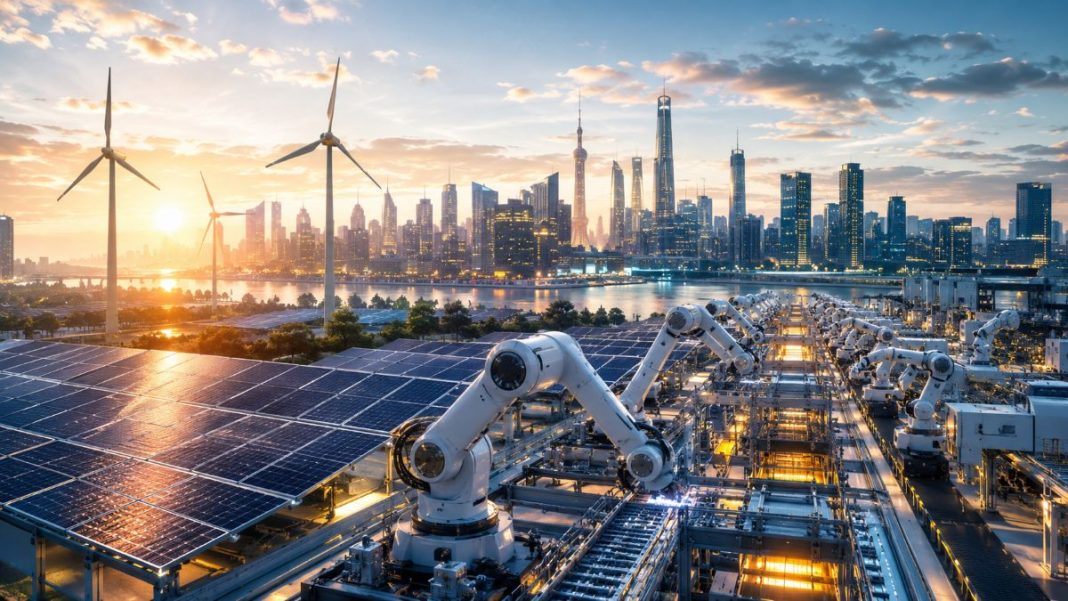
Image generated with Ai
China’s rapidly expanding digital economy is transforming not only its industrial landscape but also the global travel and business ecosystem. During the first half of 2026, the country’s electricity consumption rose significantly, reflecting the accelerating adoption of artificial intelligence, advanced manufacturing, internet data centers, and electric mobility. These developments are strengthening China’s position as one of the world’s leading technology and innovation hubs while creating new opportunities for business travel, investment, conferences, and international collaboration.
The latest electricity consumption figures demonstrate how China’s economic transition is increasingly powered by emerging technologies rather than traditional heavy industries alone. As artificial intelligence applications become more widespread and advanced manufacturing expands, demand for reliable electricity continues to climb. This trend has important implications for global investors, multinational corporations, aviation, hospitality, convention tourism, and technology-driven business travel. The country’s growing emphasis on digital infrastructure, clean energy, and industrial modernization also reinforces its competitiveness alongside leading technology economies such as the United States, Japan, and South Korea, making China an increasingly influential destination for innovation-focused travel and international commerce.
China’s Electricity Consumption Continues Strong Growth in 2026
| Key Indicator | First Half of 2026 |
|---|---|
| Total Electricity Consumption | Nearly 5.1 trillion kWh |
| Overall Growth | 5.3% year-on-year |
| Service Sector Consumption | 991.6 billion kWh |
| Service Sector Growth | 8% |
China recorded nearly 5.1 trillion kilowatt-hours of electricity consumption between January and June 2026, representing a 5.3 percent increase compared with the same period last year. The figures highlight the country’s continued economic resilience despite evolving global economic conditions.
The latest data from China’s National Energy Administration indicate that electricity demand remains closely linked to expanding digital infrastructure, high-value manufacturing, and service-sector activities rather than relying exclusively on traditional industrial production.
Advertisement
Advertisement
This shift demonstrates the country’s long-term economic transformation toward innovation-led growth, technological advancement, and sustainable industrial development.
Artificial Intelligence Emerges as a Major Driver of Electricity Demand
| AI-Related Growth Area | Performance |
|---|---|
| Internet Data Center Services | +44% |
| AI Computing Demand | Rapid Expansion |
| Cloud Infrastructure | Strong Growth |
| Digital Services | Significant Increase |
Artificial intelligence has become one of the most influential contributors to China’s rising electricity demand.
Advertisement
Advertisement
The rapid deployment of AI-powered applications requires enormous computing capacity, driving unprecedented expansion of internet data centers across the country. Every AI model requires substantial processing power for training, inference, and continuous optimization, placing increasing demands on electricity networks.
Industry estimates indicate that generating a five-second high-definition video using artificial intelligence can consume electricity equivalent to fully charging approximately ten smartphones. While this example illustrates AI’s intensive energy requirements, it also reflects the growing scale of AI adoption across numerous industries.
Advertisement
Advertisement
As Chinese technology companies continue investing in generative AI, cloud computing, robotics, automation, and machine learning, electricity consumption associated with digital infrastructure is expected to continue rising.
Internet Data Centers Become Critical Infrastructure
| Data Center Indicator | Value |
|---|---|
| Electricity Consumption | 49.4 billion kWh |
| Annual Growth | 44% |
Internet data centers consumed 49.4 billion kilowatt-hours of electricity during the first six months of 2026, representing an impressive 44 percent year-on-year increase.
This remarkable expansion reflects China’s continued investment in cloud computing, digital services, financial technology, e-commerce, telecommunications, healthcare platforms, and AI computing.
According to industry representatives, electricity consumption by internet data centers during the first half of 2026 nearly matched consumption levels recorded throughout the entire year of 2024, highlighting the extraordinary pace of technological expansion.
Advertisement
Advertisement
Electric Vehicle Infrastructure Accelerates Energy Consumption
| EV Infrastructure | First Half 2026 |
|---|---|
| Electricity Consumption | 81 billion kWh |
| Growth Rate | 56.9% |
China’s electric vehicle charging and battery swapping services experienced one of the fastest growth rates among all electricity-consuming sectors.
Electricity consumption reached 81 billion kilowatt-hours, increasing by nearly 57 percent compared with the previous year.
The figures demonstrate China’s continued leadership in electric vehicle adoption, charging infrastructure expansion, battery innovation, and sustainable transportation development.
Growing EV infrastructure supports domestic mobility while encouraging international automotive investment and business partnerships throughout China’s transportation ecosystem.
High-Tech Manufacturing Strengthens Industrial Competitiveness
| Manufacturing Indicator | Value |
|---|---|
| Electricity Consumption | 600.8 billion kWh |
| Annual Growth | 9.8% |
| Share of Manufacturing Electricity | 24.3% |
High-tech manufacturing and advanced equipment production continued outperforming many traditional industrial sectors.
Electricity consumption within these industries increased by 9.8 percent year-on-year to 600.8 billion kilowatt-hours.
Advertisement
Advertisement
These industries accounted for 24.3 percent of all manufacturing electricity consumption, demonstrating China’s ongoing industrial modernization strategy.
Advanced semiconductor production, robotics, aerospace equipment, electronics manufacturing, renewable energy technologies, medical devices, and intelligent manufacturing systems continue driving industrial expansion.
Service Sector Leads Economic Transformation
The service sector recorded the fastest electricity consumption growth among China’s three major economic sectors.
Electricity use reached 991.6 billion kilowatt-hours, representing an 8 percent annual increase.
Growth reflects expanding financial services, digital commerce, logistics, hospitality, healthcare, education, professional consulting, tourism support services, and technology-enabled businesses.
The increasing role of services demonstrates China’s gradual transition toward a more diversified economy supported by innovation and knowledge-intensive industries.
Advertisement
Advertisement
Business Travel Benefits from China’s Innovation Economy
| Travel Segment | Growth Opportunity |
|---|---|
| Business Conferences | Expanding |
| Technology Exhibitions | Increasing |
| Corporate Travel | Strong |
| Investment Forums | Growing |
| Industrial Tourism | Rising |
China’s expanding AI and technology ecosystem is expected to generate additional demand for business travel throughout 2026 and beyond.
Technology conferences, artificial intelligence exhibitions, manufacturing expos, investment forums, startup summits, and international trade fairs continue attracting executives, researchers, engineers, investors, entrepreneurs, and policymakers from around the world.
Major innovation centers including Beijing, Shanghai, Shenzhen, Guangzhou, Hangzhou, and Suzhou continue strengthening their positions as leading destinations for international business events.
Hotels, airlines, convention centers, transportation providers, and tourism businesses are likely to benefit from sustained growth in corporate travel linked to China’s expanding innovation economy.
Digital Infrastructure Supports International Investment
Reliable electricity infrastructure remains fundamental to attracting foreign direct investment into technology-intensive industries.
As multinational corporations establish research centers, manufacturing facilities, AI laboratories, and regional headquarters, dependable power supplies become increasingly important.
Advertisement
Advertisement
China’s ongoing investment in electricity generation, transmission networks, renewable energy integration, and smart grid technologies supports continued expansion across numerous industrial sectors.
Stable energy infrastructure also strengthens investor confidence while supporting long-term economic competitiveness.
Implications for Global Technology and Tourism
China’s rising electricity consumption extends beyond domestic economic indicators.
International technology companies increasingly view China as an important market for research partnerships, manufacturing collaboration, artificial intelligence development, and supply chain integration.
This environment encourages more international business travel, executive meetings, academic exchanges, technology partnerships, and cross-border investment activities.
Hotels near technology parks, airports serving innovation hubs, conference venues, and urban transportation systems are likely to experience sustained demand as international engagement continues expanding.
Advertisement
Advertisement
For travel professionals, understanding China’s evolving industrial landscape is becoming increasingly important as technology-driven mobility creates new travel patterns across Asia and globally.
Outlook for the Second Half of 2026
Electricity demand is expected to remain strong throughout the remainder of 2026 as artificial intelligence adoption accelerates further.
Continued expansion of cloud computing, electric vehicle infrastructure, advanced manufacturing, digital services, and smart industrial technologies will likely sustain upward momentum in electricity consumption.
Future investments in renewable energy, intelligent power grids, battery technologies, and energy-efficient computing may help balance growing demand while supporting China’s long-term sustainability objectives.
As AI continues transforming industries worldwide, China’s electricity consumption trends offer valuable insight into the future relationship between digital innovation, industrial development, energy infrastructure, and international business travel.
Frequently Asked Questions
1. Why did China’s electricity consumption increase in the first half of 2026?
The increase was mainly driven by artificial intelligence, internet data centers, electric vehicle charging infrastructure, high-tech manufacturing, and continued expansion of the service sector.
Advertisement
Advertisement
2. How much electricity did China consume during January to June 2026?
China consumed nearly 5.1 trillion kilowatt-hours of electricity during the first half of 2026.
3. What was the overall growth rate in electricity consumption?
Electricity consumption increased by 5.3 percent compared with the same period in 2025.
4. Why are AI applications increasing electricity demand?
Artificial intelligence requires high-performance computing, large data centers, and continuous processing, all of which consume significant amounts of electricity.
5. How much did internet data center electricity consumption grow?
Electricity consumption by internet data centers increased by 44 percent year-on-year.
6. What role do electric vehicles play in electricity demand?
Growing EV charging and battery swapping infrastructure increased electricity consumption by 56.9 percent during the first half of 2026.
7. How did high-tech manufacturing perform?
Electricity consumption in high-tech manufacturing and equipment production grew 9.8 percent, reflecting continued industrial modernization.
Advertisement
Advertisement
8. Why is this important for business travel?
Technology investment, innovation conferences, manufacturing partnerships, and corporate expansion generate greater demand for international business travel and meetings.
9. Which industries are expected to continue driving electricity demand?
Artificial intelligence, cloud computing, advanced manufacturing, semiconductor production, electric mobility, robotics, and digital services are expected to remain major contributors.
10. What does this trend mean for the global economy?
China’s expanding digital economy strengthens international technology collaboration, investment, innovation, supply chain development, and business travel while reinforcing its role as a leading global technology and manufacturing hub.
Advertisement
Advertisement