

Published on
July 21, 2026

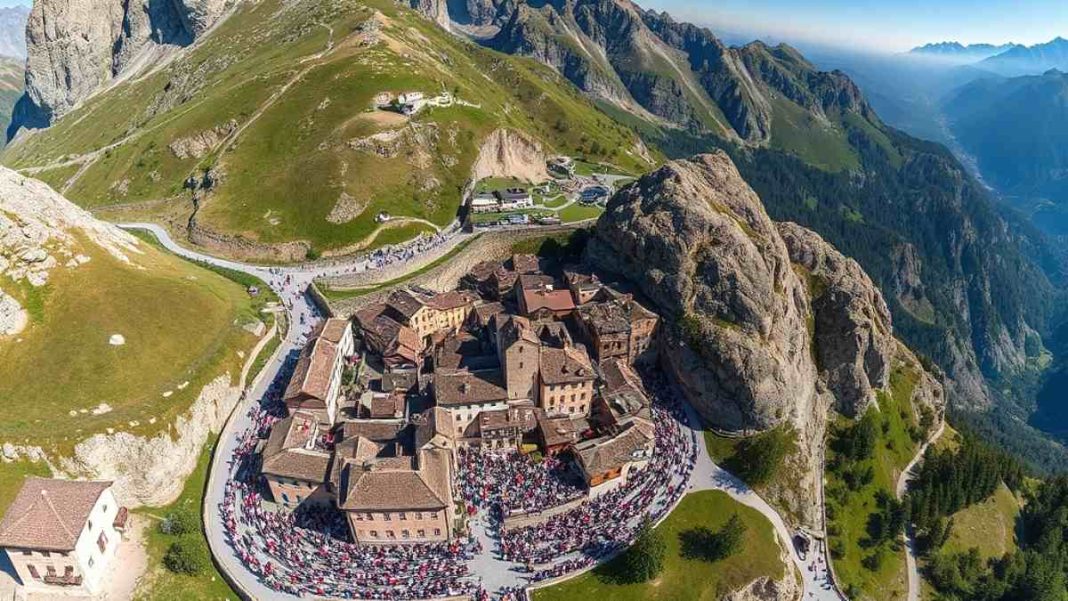
Image generated with Ai
Andorra outpaces The Bahamas, Malta, Iceland, Croatia, Cyprus, Cabo Verde, and The Maldives in the 2026 sovereign tourism saturation and carrying capacity breakdown, highlighting a major shift in how destinations manage visitor pressure. As global travel demand expands, Andorra faces growing attention over its limited space, rising tourist concentration, and long-term sustainability challenges. Meanwhile, The Bahamas, Malta, Iceland, Croatia, Cyprus, Cabo Verde, and The Maldives continue balancing international arrivals with environmental protection and infrastructure capacity. Therefore, this tourism analysis explores what you need to know about sovereign tourism saturation, carrying capacity breakdown, and the evolving pressures shaping these destinations in 2026. The comparison reveals how smaller nations are adapting to changing travel patterns while protecting their natural, cultural, and economic resources.
Across the eight sovereign economies exhibiting the most pronounced demographic-to-tourism imbalances in the 2025/2026 period, stark structural disparities are revealed by the baseline data:
- Andorra: An estimated permanent resident population of 89,486 is recorded alongside more than 8,000,000 annual inbound tourist arrivals in 2025, generating an extraordinary Arrivals-to-Population Ratio of roughly 89.4 to 1. A historic monthly peak of 850,000 visitors was registered in March 2026.
- The Bahamas: A resident population estimated at 400,000 absorbed 12,499,871 foreign arrivals in 2025, yielding an Arrivals-to-Population Ratio of approximately 31.2 to 1. Cruise passenger arrivals comprised 86.5 percent of all inbound traffic.
- Malta: A permanent population of 588,254 absorbed over 3,200,000 estimated annual inbound tourists, resulting in an Arrivals-to-Population Ratio of 5.4 to 1. A European Union high intensity benchmark of 20 commercial overnight stays per inhabitant was established by Eurostat.
- Cyprus: An estimated resident population of 983,000 in government-controlled areas recorded 4,534,073 international tourist arrivals in 2025, establishing an Arrivals-to-Population Ratio of 4.6 to 1 and a commercial intensity of 19 overnight stays per resident.
- Croatia: An estimated resident population of 3,800,000 recorded 20,700,000 commercial and non-commercial tourist arrivals in 2025, yielding an Arrivals-to-Population Ratio of 5.4 to 1. An EU-leading intensity benchmark of 24 commercial overnight stays per inhabitant was recorded by Eurostat.
- Iceland: An estimated resident population of 390,000 absorbed 2,253,157 international inbound arrivals in 2025, creating an Arrivals-to-Population Ratio of 5.8 to 1, with projections indicating 2.7 million arrivals for 2026.
- The Maldives: An estimated resident population of 400,000 welcomed 2,246,516 overnight international tourists in 2025, establishing an Arrivals-to-Population Ratio of 5.6 to 1. Direct gross value added from tourism accounted for 24.4 percent of Real Gross Domestic Product in the first quarter of 2025.
- Cabo Verde: An estimated resident population of 550,000 hosted 1,248,052 hotel guest arrivals in 2025, creating an Arrivals-to-Population Ratio of 2.3 to 1, with Sal Island concentrating 57.7 percent of all entries.
Andorra: Record Visitor Densities and Urban Management Controls
The most extreme disparity between tourism volumes and permanent population globally is exhibited by the Principat d’Andorra. Official statistical data published by the Departament d’Estadística of the Government of Andorra indicates that the permanent resident population stood at 89,486 as of May 2026. In comparison, over 8 million visitors were absorbed by the sovereign territory throughout 2025, establishing an unprecedented arrivals-to-population ratio of nearly 90 to 1. This extreme saturation is magnified during peak seasonal operational cycles. In March 2026, a historic high of 850,000 visitors in a single month was recorded, representing a visitor volume nearly ten times larger than the entire resident demographic base. Border surveys conducted in April 2026 registered 631,363 total visitors, comprising 289,699 overnight tourists and 341,664 same-day excursionists. A minor 2.1 percent year-on-year contraction in total monthly visitors was noted in April 2026, influenced in part by a 5.1 percent decline in cross-border vehicle entries.
An unprecedented economic expansion has been fueled by this massive tourist density. Real GDP growth of 3.3 percent year-on-year was registered in the first quarter of 2026. Continuous upward momentum in tourist yields was maintained, with average daily spending per visitor reaching 183 Euros in 2025 and rising further to 185 Euros in March 2026. This spending level significantly outpaces nearby Pyrenean ski destinations, such as Baqueira Beret in Spain, where average daily spending hovered around 145 Euros. Public finances were substantially supported by these yields, as the aggregate public sector expenditure budget for 2025 reached 1.80 billion Euros, representing an 8.3 percent increase over the previous fiscal year, underpinned by robust indirect value-added tax revenues. Furthermore, cultural infrastructure recorded strong utilization, with national museums and monuments registering 214,886 visits in 2025, marking a 25 percent surge relative to 2024.
Advertisement
Advertisement
To manage critical carrying capacity bottlenecks and prevent social friction, decisive structural interventions were enacted by the Andorran administration. A strict legal moratorium on new tourist accommodation licenses was instituted, which led to a 25 percent revaluation of existing vacation rental properties and redirected private development capital toward premium four-star and five-star hotel assets. Additionally, to optimize urban planning and transit management, a revised tracking methodology was deployed by the Departament d’Estadística utilizing mobile network signaling data from Andorra Telecom to monitor real-time visitor movements and concentration zones across the country.
The Bahamas: Cruise Sector Surges and Digital Border Operations
An aggressive macroeconomic expansion was sustained by The Bahamas throughout 2025 and into 2026, driven by a structural surge in cruise passenger arrivals and resilient stopover air traffic. Official figures from the Ministry of Tourism, Investments and Aviation confirm that 12,499,871 foreign visitors were welcomed by the archipelago in 2025, yielding an extraordinary arrivals-to-population ratio of roughly 31 to 1 against a domestic population base of approximately 400,000 residents. The dominant catalyst for this volume was the cruise sector, which accounted for 86.5 percent of total entries with over 10.6 million sea arrivals, marking a 14 percent year-on-year expansion and nearly doubling 2019 baseline levels. High-yield stopover air arrivals remained solid at nearly 1.7 million visitors.
Advertisement
Advertisement
Data published by the Central Bank of The Bahamas demonstrates that national balance of payments stability and public finances were fortified by this continuous inflow. Total inbound arrivals rose by 17.5 percent year-on-year to 3.9 million in the first quarter of 2026, with sea arrivals expanding 19.6 percent to 3.3 million and high-value air arrivals growing 5.2 percent to 500,000. Year-to-date arrivals through April 2026 exceeded 5 million, reflecting a 13.9 percent expansion over the same period in 2025. Total government revenue and grants for the 2025/2026 fiscal period expanded by 4.6 percent to 1,507.6 million dollars, propelled by an 11.5 percent increase in Value Added Tax receipts to 739.14 million dollars, which effectively narrowed the national fiscal deficit to negative 342.44 million dollars. External sovereign reserves grew by 273.1 million dollars in the first quarter of 2026, reaching an ending balance of 3,085.3 million dollars, equivalent to 7.2 months of merchandise import cover.
Physical carrying capacity limits are nevertheless emerging across the archipelago. Stopover tourism encounters binding hotel room constraints during peak seasonal periods. Consequently, capital allocation has shifted rapidly into short-term vacation rental markets. Tracking data from AirDNA reveals that room nights sold expanded by 10.5 percent in March 2026 and sustained a 9.9 percent year-to-date growth rate through May. Average Daily Rates for entire-place vacation rentals rose 9.5 percent to 752.89 dollars in May 2026, while hotel-comparable vacation rentals recorded an Average Daily Rate of 167.72 dollars. To modernize entry procedures under high passenger volumes, a digital arrival card pilot program known as the Bahamas Digital Arrival Card was introduced by the Ministry of Tourism in May 2026 to systematically replace manual paper documentation.
Advertisement
Advertisement
Malta: High Population Density and Infrastructure Saturation Limits
Extreme demographic and tourism density within the European Union is exemplified by the Republic of Malta. The permanent resident population was estimated at 588,254 at the close of 2025, reflecting a 2.4 percent year-on-year increase driven primarily by a net migration inflow of 13,906 individuals. National population density was pushed to a record 1,817.4 persons per square kilometer, establishing the highest demographic concentration in the EU. Foreign nationals now constitute 31.1 percent of the total resident population, predominantly concentrated in working-age cohorts. Concurrently, European Union statistics published by Eurostat show that Malta registers 20 tourist nights spent per inhabitant in commercial accommodations, with international visitors accounting for 93.3 percent of all overnight stays during the first quarter of 2026.
National Statistics Office figures for the first five months of 2026 show that inbound arrivals grew by 17.9 percent year-on-year to 1,673,602, while total overnight stays expanded to 9.2 million nights. Inbound tourist expenditure over this five-month period reached 1,339.6 million Euros, reflecting a 14.7 percent increase compared to the corresponding period in 2025. For the month of May 2026 alone, arrivals expanded by 22.3 percent to 457,636, spending 2.59 million nights with an average length of stay of 5.7 nights and generating 419.9 million Euros in total expenditure. Visitors from the United Kingdom, Italy, and Poland comprised 44.8 percent of the total market, with rented accommodation establishments absorbing 88.0 percent of all guest nights. The satellite islands of Gozo and Comino represented high-intensity zones, absorbing 50.5 percent of all year-to-date visitors.
Domestic labor markets were significantly expanded by these high volumes, as registered full-time employment increased by 4.4 percent to 306,386 in February 2026, driven by private service sector growth. However, severe socio-economic frictions have been generated by the combination of high resident density and intense visitor traffic. Public infrastructure has struggled under continuous demand, with local administrative councils issuing formal warnings that transportation corridors, municipal waste management networks, and the national electricity grid—which suffered major power outages for a fourth consecutive summer—are encountering critical carrying capacity limits. Furthermore, average tourist expenditure per capita declined from 823 Euros in 2025 to 800 Euros in 2026, sparking intense domestic policy debates regarding the long-term viability of a volume-driven tourism model.

Image generated with Ai
Iceland: Export Currency Dependency and Volcanic Risk Factors
The macroeconomic framework of Iceland is heavily centered upon tourism, which has permanently overtaken fisheries and aluminum smelting to become the nation’s principal export sector and primary source of foreign currency earnings. Against an estimated domestic population of 390,000 residents, international inbound arrivals reached 2,253,157 in 2025, reflecting a slight 0.4 percent contraction compared to the 2,261,391 arrivals recorded in 2024. This volume represents a nearly tenfold increase over the arrivals recorded in the year 2000. Projections released by the Icelandic Tourist Board indicate that visitor arrivals are expected to scale to over 2.7 million in 2026, advancing an aggressive strategic plan targeting 3.2 million annual visitors by 2030.
Advertisement
Advertisement
Early 2026 economic monitoring by Landsbankinn and Íslandsbanki indicates resilient performance. Foreign passenger departures through Keflavík Airport during the first quarter of 2026 matched the levels recorded in the same period of 2025, while March visitor numbers registered a year-on-year increase for the first time since the preceding autumn. Transatlantic travel corridors remained dominant, with visitors from the United States accounting for over 25 percent of total airport passenger traffic, followed by British nationals at 14 percent and Chinese visitors at 6 percent. A 6 percent year-on-year increase in overnight hotel stays was recorded in February 2026, heavily propelled by Chinese demand in South Iceland. This structural volume supports Iceland’s elevated GDP per capita, which reached nearly 100,000 dollars in 2025, and reinforces national medium-term fiscal targets aiming for a balanced general budget by 2027.
Nevertheless, structural, natural, and macroeconomic constraints are increasingly evident. Recurrent volcanic eruptions on the Reykjanes Peninsula have required localized evacuations and infrastructure protection, although overall travel demand has proven resilient. Environmental carrying capacity concerns have prompted calls for stricter physical access controls across vulnerable natural sites. Furthermore, indicators of spending normalization emerged in early 2026; Value Added Tax turnover in the tourism sector contracted by 7 percent year-on-year in the March-April period to approximately 130 billion ISK, driven by a 10 percent drop in air passenger transport turnover and a 17 percent reduction in travel agency revenues. Land passenger transport turnover dropped 22 percent in the January-February period. Additionally, the Analytica Composite Leading Indicator contracted in early 2026, reflecting softer consumer sentiment. However, record summer bookings are anticipated due to the total solar eclipse scheduled for August 12, 2026.
Croatia: Summer Seasonal Peaks and Price Competitiveness Challenges
The most intensive commercial tourism model in the European Union is operated by the Republic of Croatia. Statistical findings published by Eurostat show that Croatia recorded 24 tourism nights spent per inhabitant in commercial accommodation establishments, leading all European Union member states. The country also exhibits the highest seasonal concentration in Europe, with 44.1 percent of all inbound trips originating from EU residents occurring during the peak summer months of July and August. For the full year 2025, 20.7 million commercial and non-commercial tourist arrivals and 94.8 million overnight stays were registered, representing year-on-year growth of 2.2 percent in arrivals and 1.2 percent in nights. Foreign tourists accounted for 17.6 million arrivals and 85.6 million commercial nights, representing a 90.3 percent share of total national tourist traffic.
Record financial returns were generated by this high traffic volume, with foreign tourism revenues reaching 15.298 billion Euros in 2025 compared to 15.0 billion Euros in 2024, providing a crucial source of foreign exchange and driving domestic retail consumption. Expansion continued into early 2026. Commercial tourist nights in January 2026 increased by 2.5 percent year-on-year to 667,000. In March 2026, total arrivals rose 17.0 percent to 507,000 and overnight stays expanded 18.7 percent to 1.2 million, with hotels absorbing 62.8 percent of the total. In May 2026, total arrivals rose 9.1 percent to 2.0 million and overnight stays grew 14.9 percent to 6.7 million. Foreign visitors accounted for 1.7 million arrivals and 6.0 million nights in May, with German tourists comprising 32.3 percent of foreign nights, concentrated heavily within the County of Istria.
Structural vulnerabilities are nonetheless emerging within Croatia’s high-intensity operational model. A steady reduction in the average length of stay for foreign visitors has been documented, declining from 5.5 nights in 2022 to 5.0 nights in the first nine months of 2025. Concurrently, rapid inflation in food, beverage, and accommodation prices has begun to erode the historical price competitiveness of the Croatian coast relative to rival Mediterranean destinations. Public economic planning agencies have issued warnings that if coastal price escalation continues to outpace structural service quality upgrades, a correction in visitor demand could be triggered, exposing the broader economy to sector-specific shocks.
Cyprus: Flight Dependency and Regional Geopolitical Vulnerabilities
A high-intensity tourism framework heavily reliant on commercial air transport is operated by Cyprus, where air connectivity accounts for 96.8 percent of all passenger arrivals and departures. The permanent resident population in government-controlled areas was estimated at 983,000 at the end of 2024. In comparison, 4,534,073 international tourist arrivals were recorded in 2025, marking a 12.2 percent year-on-year expansion and establishing an arrivals-to-population ratio of approximately 4.6 to 1. Total tourism revenues in 2025 reached a record 3,696.1 million Euros, reflecting a 15.2 percent increase over 2024, while average expenditure per visitor increased 2.6 percent to 815.16 Euros. Eurostat measures Cyprus with a high tourism intensity of 19 commercial overnight stays per resident, with visitors staying an average of 8 nights or more and 93 percent of guest nights occurring in commercial rented accommodations.
Advertisement
Advertisement
Data published by the Cyprus Statistical Service for early 2026 shows solid initial growth, with arrivals expanding by 8.5 percent year-on-year in January to 121,625 and 9.5 percent in February to 146,516. During these winter months, Poland and Israel emerged as primary source markets, outperforming traditional British market dominance. However, extreme vulnerability to external geopolitical disruptions was demonstrated in March 2026 following the escalation of military conflicts across the Middle East. Due to sudden airspace closures, widespread flight cancellations, and a contraction in regional travel confidence, international tourist arrivals in March 2026 plunged by 30.7 percent year-on-year to 139,198, compared to 200,736 arrivals recorded in March 2025.
This sudden monthly downturn dragged down cumulative first-quarter arrivals for 2026 by 8.8 percent to 407,339. This rapid decline illustrates how quickly external geopolitical instability can destabilize an island economy that is structurally dependent on uninterrupted international aviation corridors.
Cabo Verde: Island Resort Expansion and West African Flight Corridors
An aggressive structural transition toward a high-density resort economy is being experienced by Cabo Verde, driven by expanded regional aviation routes and cruise ship calls. Against a domestic population of approximately 550,000 residents, hotel establishments across the archipelago welcomed a record 1,248,052 guests in 2025, representing a 6.0 percent year-on-year increase over 2024. Total tourist overnight stays grew by 8.3 percent to 6,120,204, resulting in an arrivals-to-population ratio of roughly 2.3 to 1 and driving overall hotel bed occupancy rates from 60 percent up to 72 percent. High geographic concentration characterized this expansion, with Sal Island absorbing 57.7 percent of all entries and Boa Vista accounting for 24.4 percent. Non-resident international visitors constituted 95.5 percent of total guest arrivals and 97.6 percent of overnight stays, with the United Kingdom remaining the primary source market.
Macroeconomic performance indicators for the first quarter of 2026 reveal an acceleration in tourism activity. Hotel guest arrivals expanded by 16.8 percent year-on-year to 379,657 guests, while overnight stays grew to 1,725,684. International visitors represented 96.4 percent of total guest entries, with the British market generating 92,433 guests in the first quarter alone. This surge in inbound volume is directly connected to a major expansion in regional air connectivity. Aviation tracking metrics published by the World Bank and OAG indicate that a 24 percent year-on-year increase in estimated air passenger arrivals was recorded in Cabo Verde during the first quarter of 2026, positioning the country among the fastest-growing aviation corridors in West Africa.
The Maldives: Hyper-Specialized Resorts and Air Hub Vulnerabilities
A hyper-specialized Small Island Developing States tourism structure is operated by the Republic of Maldives, supported by a domestic resident population of roughly 400,000. In 2025, a record-breaking 2,275,088 total visitors were welcomed (+9.7 percent), of which overnight tourists accounted for 2,246,516 (+9.8 percent), generating an arrivals-to-population ratio of approximately 5.6 to 1. Sovereign economic dependency on tourism is absolute; direct gross value added from tourism accounted for 24.4 percent of Real Quarterly GDP in the first quarter of 2025, generating 6,756 million Maldivian Rufiyaa. In monthly GDP accounts, accommodation and food services represent the largest single economic sector, contributing between 19.9 percent and 22.9 percent of total national economic output. Cumulative Real GDP through October 2025 reached 87,957 million Rufiyaa.
To service this high-density model, operational bed capacity was expanded to 68,549 beds across 1,293 active facilities, including 185 luxury island resorts and marinas hosting 72.5 percent of all inbound tourists. This isolated, high-yield infrastructure model successfully mitigates social carrying capacity friction by physically segregating tourist operations from local population centers. However, severe structural imbalances characterize the domestic labor market. Figures from the Maldivian Labor Force Survey show that while the foreign worker employment ratio stands at an exceptionally high 97.5 percent (58,459 individuals), the employment ratio for native Maldivians is lower at 64.5 percent (82,580 individuals). Native unemployment involved 3,289 persons, creating a localized unemployment rate of 3.7 percent.
Advertisement
Advertisement
Furthermore, absolute reliance on long-haul aviation networks leaves the Maldivian economy highly exposed to external transit shocks. Major volatility was experienced during the first half of 2026. Strong growth was recorded in January (+5.0 percent) and February (+17.7 percent), but the escalation of military conflict in the Middle East in March severely disrupted major regional hub airports. Consequently, international tourist arrivals to the Maldives contracted sharply by 19.8 percent in March and 24.4 percent in April 2026. By July 12, 2026, cumulative tourist arrivals for the year stood at 1,113,092, representing a net 4.9 percent decline compared to the same period in 2025, underscoring the extreme sensitivity of dependent island economies to international aviation disruptions.

Image generated with Ai
Short-Term Accommodation Yields and Operational Bed Capacity
To evaluate how these high-density tourism economies accommodate visitor volumes relative to their local demographic constraints, operational capacity indicators for the peak Q1 2026 period demonstrate contrasting strategies:
| Host Country | Active Vacation Rental Listings (March 2026) | Vacation Rental Occupancy Rate (Q1 2026 Entire-Place) | Average Daily Rate (ADR / Local Currency or USD) | National Tourist Bed Capacity (Operational / 2026) |
|---|---|---|---|---|
| Andorra | Restricted by legal moratorium | 95% peak weekend occupancy (March 2026) | €185 average daily visitor spend | Rental beds capped by moratorium; existing licenses revalued by 25% |
| The Bahamas | 4,805 active listings | 57.7% average entire-place occupancy | $750.49 entire-place ADR (March 2026) | New Providence leads with 1,843 listings; Grand Bahama holds 384 |
| Malta | High hotel concentration | 93.3% foreign share of Q1 2026 overnight stays | €162.10 average per night spend (May 2026) | Rented accommodation hosted 88% of total guest nights |
| Iceland | Capital region dominant | 59.7% registered hotel occupancy (April 2026) | 21.8B ISK foreign card transaction volume | Volcanic activity shifted demand toward capital region accommodations |
| Croatia | 441,000 commercial units | 59.1% average room occupancy (May 2026) | Premium coastal rates (5.0 nights average foreign stay) | 1.2 million permanent beds (Holiday homes hold 49.2% share) |
| Cyprus | High hotel concentration | 85.6% foreign share of Q1 2026 overnight stays | €815.16 average spending per tourist trip | Rented accommodation hosted 93% of total guest nights |
| Cabo Verde | Island resort focused | 65.0% bed occupancy rate (Q1 2026) | High-density Sal Island resort pricing | Hotels represent 81.9% of total guest accommodations |
| The Maldives | 920 operational guest houses | 78% peak capacity utilization (February 2026) | High-yield resort pricing (Resort share: 72.5% of bed nights) | 68,549 registered tourist beds (67,581 in operation) |
Sectoral Macroeconomic Contribution and Real GDP Indicators
The macroeconomic relationship between high-density tourism operations and broader national economic metrics across the analyzed economies is synthesized below:
| Host Country | Real GDP Growth Rate (2025/2026 YoY) | Tourism Share of Real GDP / GVA | Estimated Direct Tourism Revenues (Annual / Yield) | National Consumer Price Inflation (Current / 2025) |
|---|---|---|---|---|
| Andorra | +3.3% (Q1 2026) | Ski tourism represents 32% of total visits | €1.80B aggregated public sector budget funded by tourism yields | +4.9% (May 2026 national index) |
| The Bahamas | +2.8% (2025 projection) | Direct GDP contribution: 28% (stayover dominant) | $1,507.6M YTD revenue; VAT collections rose 11.5% to $739.14M | 1.1% average CPI in 2025; firmed by 9.5% hotel/restaurant hikes |
| Malta | +3.9% (Q1 2026) | Service sector GVA drives 4.4% employment growth | €1,339.6M inbound tourist spend (Jan-May 2026) | Low unemployment (3.5% in Q1); firmed by high municipal demands |
| Iceland | Projected rebound post-volcanic setback | Surpassed fisheries and aluminum as primary GDP engine | Primary source of national foreign currency earnings | High service inflation; car rentals grew 55% in early 2026 |
| Croatia | Solid coastal service-sector expansion | Direct GDP share firmed by coastal and transit yields | €15.298 billion in foreign tourist revenues in 2025 | High domestic inflation; coastal price hikes threaten competitiveness |
| Cyprus | Steady pre-conflict growth momentum | Inbound services account for the bulk of commercial stays | €3,696.1 million in foreign tourist revenues in 2025 | +4.1% Harmonized Index of Consumer Prices (June 2026) |
| Cabo Verde | Strong Q1 service sector GVA expansion | Hotel GVA represents the primary national GDP driver | Aviation entries expanded 24%, boosting central bank reserves | High import dependency; firmed by peak Sal Island demands |
| The Maldives | +3.3% (2024 annual baseline) | Tourism GVA represents 24.4% of Q1 Real GDP | Accommodation GVA: MVR 2,079 million in October 2025 | Low overall CPI, but firmed by high resort and import costs |
Macroeconomic Syntheses and Structural Policy Conclusions
A fundamental structural conflict between rapid short-term GDP expansion and long-term economic stability is revealed by the analysis of high-density tourism across micro-states in 2026. The empirical evidence demonstrates several core conclusions:
First, when the ratio of annual tourist arrivals to permanent residents exceeds significant thresholds, diminishing marginal returns on volume are observed. Beyond these levels, host economies experience severe social carrying capacity strains, municipal infrastructure degradation, utility grid instability, and local service price inflation, as demonstrated in Malta, Andorra, and Croatia.
Second, micro-states and Small Island Developing States are increasingly compelled to pivot away from volume-driven growth strategies toward high-yield, managed-density tourism models. This strategic shift is evidenced by the enforcement of strict accommodation licensing moratoria in Andorra, and the physical segregation of visitor activities under the resort-island model in The Maldives.
Advertisement
Advertisement
Finally, high-density tourism economies remain exceptionally vulnerable to external transit, geopolitical, and macroeconomic shocks. The rapid contractions in tourist arrivals recorded in Cyprus and The Maldives during regional Middle East escalations in early 2026 illustrate how quickly international airspace closures, flight cancellations, and fuel price spikes can destabilize highly dependent host nations.
Consequently, long-term macroeconomic resilience in micro-states requires the implementation of robust regulatory frameworks designed to maintain a sustainable equilibrium between visitor inflows and domestic carrying capacities.
Advertisement
Advertisement