
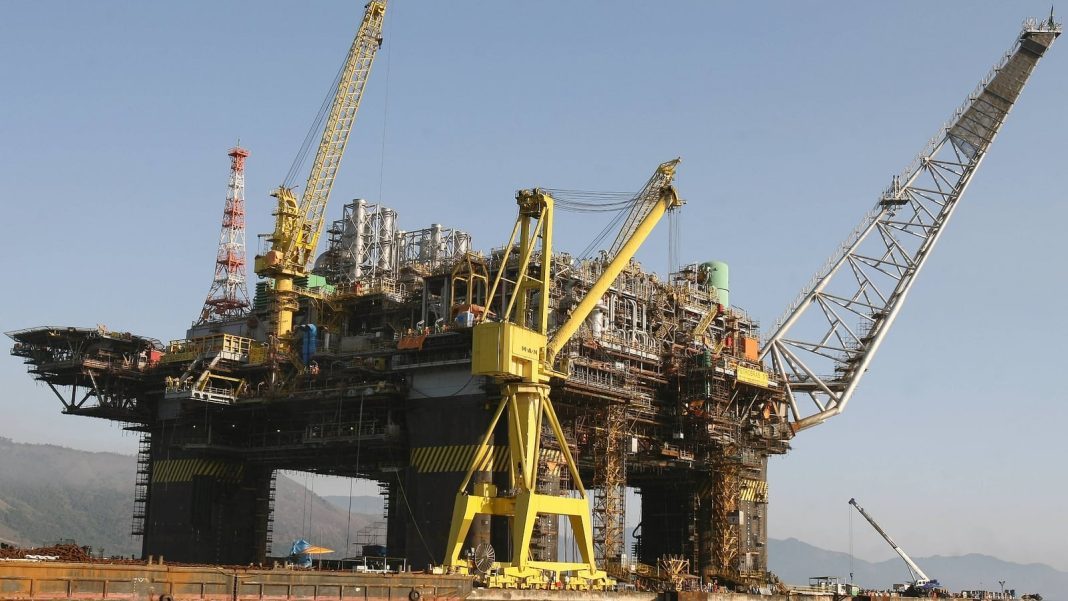

Oil prices have risen as negotiations between the United States and Iran over a peace deal and the reopening of the Strait of Hormuz hit an impasse.
Yesterday US President Donald Trump responded to Iranian demands with a set of his own conditions for a peace deal. He called for Iran to pay compensation for those killed in wars, attacks and protests, in a rhetorical escalation likely to complicate efforts to reopen the crucial waterway.
Brent crude futures edged up to $88.09 per barrel and US crude futures rose to $82.52, both the highest levels since 31 July, after the contracts rallied roughly 5% yesterday.
“We’re now in a bit of a Mexican standoff, if you’d like, in terms of who blinks first,” said Tony Sycamore, a market analyst at IG.
“This is going to be almost a war of attrition now,” he said. “You probably can see the (oil) market sitting around the $75 to $95 range while we wait to see who blinks first.”
The latest uptick in fuel costs raises the stakes for the US July consumer price report due tomorrow, at which expectations are for a monthly rise of 0.1% in the headline reading and 0.2% for the core measure.
Any upside surprise could rekindle bets of a US Federal Reserve rate hike next month, with the odds currently a coin toss.
“We think the risks are skewed towards a hot print, which would probably drive a rebound in rate expectations and, potentially, renewed worries about stagflation,” said Jonas Goltermann, chief markets economist at Capital Economics.
“Overall, our assessment remains that the US economy is running a bit hotter than a ‘Goldilocks’ situation. That points to higher interest rates.”
Trading of cash US Treasuries was closed in Asia this morning owing to a holiday in Japan, but futures fell slightly, implying higher yields.
The Reserve Bank of Australia held its cash rate steady at 4.35% for a second straight meeting, saying the economy was slowing as expected, but warned it might yet hike again if needed to control inflation.
MSCI’s broadest index of Asia-Pacific shares outside Japan swung between losses and gains and was up 0.36%, while South Korea’s KOSPI rose 1.3%, as the latest escalation in Gulf hostilities kept market sentiment fragile.
Overnight, Nvidia said it partnered with six major financial institutions to launch compute financing platforms aimed at raising more than $500 billion in third-party capital for AI infrastructure, underscoring the scale of the sector’s investment boom.
“A small part of me was left wondering whether this is how it felt when sub-prime mortgages first became a mainstream product – the innovation that eventually helped trigger the GFC,” added Sycamore.
Hong Kong’s Hang Seng Index was down 0.6%, while China’s CSI300 blue-chip index eased 0.05%.