


The day has been relentless. Your mail is flooded, and the news cycle feels depressing and unending. You are too emotionally drained by the end of the day. But, thankfully, you can make yourself feel better with just one click, maybe two or three (depending on your bank balance or maybe not). We live in a world today where we have an app for every emotion. Feeling lonely? Netflix! Feeling hungry? Your food can be delivered in 15 minutes! Feeling overwhelmed and anxious after another day of monotony? Add to cart!
When Carrie Bradshaw kept splurging on high-end heels—not the kind you would pick up at Sarojini in New Delhi or even ThriftCon New York at the Brooklyn Storehouse—despite being the least financially secure among her three closest friends, I found her dangerously reckless. I watched her struggle to keep her apartment while it overflowed with Dolce and Gabbana, Manolo Blahnik, Prada, Chanel, and Gucci. At one point, she even made Charlotte feel guilty for refusing to lend her money.

Years later, after navigating adulthood and approaching 30 myself, I find that I sympathise with Carrie. Shopping wasn’t just an indulgence for her, but it was a coping mechanism. Broke up with Mr Big? Buy a pair of Manolo Blahniks. Argued with a friend? Vent to Miranda while splurging on another outrageously expensive pair of shoes.
 Sarah Jessica Parker as Carrie Bradshaw in “Sex and the City”
However, shopping, once driven by necessity or desire, is increasingly becoming a form of emotional self-soothing. A growing number of people are finding themselves buying things they neither planned for nor particularly need, not for the products themselves, but for the fleeting sense of control and comfort they offer. The phenomenon has a name: doom shopping.
It has become a coping mechanism to momentarily escape anxiety, loneliness, or emotional exhaustion. And South Korea’s so-called “dopamine sites” are proof that this is real. These sites allow users to feel the thrill of online shopping and food delivery; however, nothing is ever delivered. Users can browse products or restaurant menus, read reviews, add items to a cart, enter a delivery address, place an order and, on some platforms, even track a virtual courier on a map.
One such app was created by South Korean developer Malhee. According to posts on his X account, the idea came from his own habit of repeatedly opening and closing food delivery apps late at night, despite having no intention of ordering anything.
배달앱을 켰다 끄기를 반복하던 그 밤에 만든 이상한 앱이 있습니다.
“음식만안와요” 🍱
진짜 배달앱처럼 메뉴 고르고, 장바구니 담고, 주문서 쓰고, 라이더 위치 추적까지 다 됩니다. 그런데… 정작 음식은 안 와요. 결제도 0원, 배달도 없음. 완전한 데모 앱이거든요.
대신 주문이 끝나면 화면에… pic.twitter.com/jrDxzdGOlA
— 말희 (@malheeelife) June 13, 2026
‘Shopping became something I turned to after difficult workdays’
For Saumya Rastogi, 28, the behaviour began during one of the most stressful phases of her life. “I first noticed it during an extremely toxic work environment when my mental health had deteriorated significantly,” the Delhi-based freelance writer told indianexpress.com.
“Shopping became something I turned to after difficult workdays. At first, it felt harmless because I could afford it, but over time I realised I was buying things I hadn’t planned to purchase and didn’t really need,” she added.
Story continues below this ad
Rastogi isn’t buying luxury items every week, but her carts are often filled with clothes, skincare, makeup, home décor and the occasional food delivery, products that promise some version of self-care. “Usually it’s a mix of stress and emotional exhaustion,” she said. “Shopping feels like a small reward for getting through the day.”
The reward, however, is fleeting. “There’s definitely a brief rush of excitement and relief. But that feeling fades pretty quickly, sometimes within a few hours, and I’m back to feeling exactly how I did before,” Saumya shared.
The cycle—stress, purchase, temporary relief and eventual regret—is familiar to many. Paricher Tavaria, Fashion communication educator, Pearl Academy, traces her own spending habits to the years immediately after the pandemic.
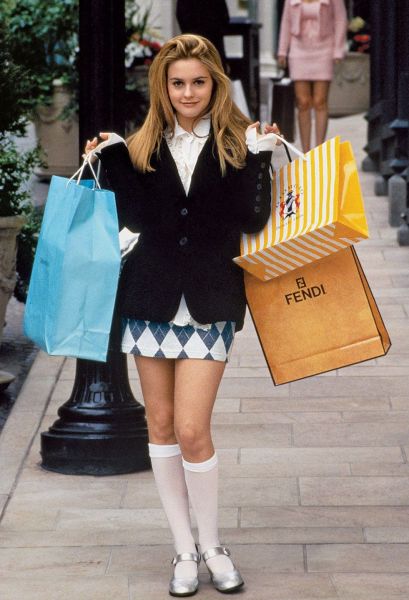 Alicia Silverstone as Cher Horowitz in “Clueless”
“Post-Covid, when we craved experiences again, I realised I had started purchasing more clothes and bags than I actually needed. The excitement of returning to normality pushed several of us towards doom scrolling, which has now led to doom spending,” she said.
Story continues below this ad
She believes social media has intensified the habit with a barrage of homegrown brands selling their items and influencers-creators promoting them. “The more time we spend consuming content online, the more we are exposed to products, advertisements and aspirational lifestyles. For many people, doom scrolling and doom spending almost become part of the same cycle now,” Paricher added.
Interestingly, Paricher doesn’t describe the feeling before a purchase as stress. “Mostly excited,” she said. “If it’s something I’ve had my eye on, buying it feels like ticking off the top task on my to-do list.”
But even she admits impulse purchases don’t always deliver. “An impulse purchase is equal to a faded high. It just makes me feel low,” she shared.
The convenience of everything arriving at the doorstep
For Neha Bahri, shopping has always had an emotional undertone. “I have spent the past two years doom shopping,” she shared. “When I was feeling gloomy, I hopped onto Myntra, saw some things I liked and bought them. I instantly felt somewhat happier.”
Story continues below this ad
Neha shared that for her, buying is an emotional response rather than a necessity. “The feeling of buying something feels heavenly. For me, doom shopping started as a way to uplift my mood,” she said.
The digital ecosystem only reinforces that behaviour by constantly telling users what’s missing in their wardrobe. “Social media platforms and e-commerce apps keep running attractive offers and showcasing interesting products day in and day out. The convenience of everything arriving at the doorstep keeps the feeling of splurging ongoing,” Neha stressed.
 Doom shopping (Photo: Pexels)
In 2023, one night while I was feeling down in the dumps, I suddenly decided to resume learning the ukulele. Since it was the end of the month, buying a new instrument should not have been my top priority. Yet I remember calling a friend and asking her to lend me money so I could place the order immediately. I could easily have waited until the following month, when my next salary was due to be credited, but I couldn’t bring myself to.
Echoing similar feelings, Neha shared that the habit has affected her finances. “Doom shopping has definitely taken a toll on me financially. Each person has their own trigger points to shop, but for me, it is an emotional coping mechanism,” she said.
Story continues below this ad
‘The financial impact’
However, not everyone who shops impulsively is trying to escape negative emotions. For Dimple Gupta, an account executive, shopping often feels like a reward. “It started during my birthday month. I wanted to gift myself something special and eventually bought a limited-edition pair of Puma sneakers,” she said.
Dimple also admitted that seeing celebrities and colleagues buying luxury items influenced her decision. “Around the same time, one of my colleagues bought herself a luxury birthday gift too, and that made me think, ‘Why shouldn’t I?’”,” she shared.
The excitement lasted until the shoes arrived. “I felt proud of myself. It was the first time I had bought something branded and expensive using my own money.”
Still, she noticed that many purchases lose their appeal after the excitement fades. “I think people often misunderstand doom shopping as simply being poor with money. In reality, for many people, it can be an emotional coping mechanism. Shopping gives them a temporary sense of happiness, excitement or control. The problem is that the feeling doesn’t always last, but the financial impact does,” Dimple said.
Story continues below this ad
Dietitian Twinkle Dedhia Mehta recalled moving to a new state with her husband and suddenly wanting to buy things that made their unfamiliar surroundings feel like home. “You don’t just relocate your possessions,” she shared. “You want your new home to look, feel and smell more comforting than the one you left behind.”
As a nutritionist, she sees a striking parallel between food and consumption. “We frequently discuss mindful eating, but we rarely discuss mindful consuming,” she highlighted. “Not every craving is worth checking out.”
“If I still want this a month from now, I’ll buy it. Just as we nourish our bodies with the proper nutrients, we should nurture our lives by letting go of excess,” she shared.
But doom shopping isn’t always about wanting another dress, ordering a large amount of food, or another pair of shoes. More often, it’s about wanting to feel calmer, happier or more in control, even if only for a few minutes. The package arrives. The dopamine fades.
Story continues below this ad
Doom shopping as a maladaptive coping mechanism
Experts warn it may signal deeper emotional distress. While doom shopping is not a recognised psychiatric diagnosis, psychologists and psychiatrists say it is emerging as a maladaptive coping mechanism, where people make unnecessary or impulsive purchases to temporarily manage stress, anxiety, boredom, loneliness, or uncertainty.
“Doom shopping is less about the item being purchased and more about the emotional state driving the purchase,” said Dr Rimpa Sarkar, PhD, Sentier Wellness, Mumbai. “The shopping process provides a brief sense of excitement, control, or distraction, even if the satisfaction is short-lived.”
According to experts, the phenomenon differs from ordinary impulse buying or the occasional “retail therapy”. While impulse purchases are often spontaneous and retail therapy may provide an occasional mood boost, doom shopping is characterised by a repetitive pattern of using shopping to regulate difficult emotions.
Dr Mouryadeep Ghatak, consultant adult psychiatrist and sexologist at Maarga Mind Care, Bengaluru, described it as an emotion-focused coping mechanism. “People don’t shop during these situations out of genuine need. Doom shopping can offer short-term emotional relief, but it does not address the underlying sense of discomfort or distress. It is basically a coping mechanism which can lead to chaos in life if control over the behaviour is lost,” he said.
Story continues below this ad
Experts say the behaviour is closely tied to the brain’s reward system. “Dopamine is released more during the anticipation of receiving a reward than after actually obtaining it,” said Dr Rimpa.
“Shopping distracts people from anxiety, sadness, loneliness, or uncertainty for a brief period. However, because the underlying emotional issue remains unresolved, the positive feeling fades quickly,” she explained.
Dr Mouryadeep added that once the desired item is acquired, the excitement rapidly diminishes, often leaving people frustrated by the poor emotional return on their spending. Over time, the brain’s reward system adapts, which may lead some individuals to spend more frequently or in larger amounts to achieve the same temporary sense of relief.
“The digital advertising industry is tuned to tap into the unconscious desires of people with unmet emotional needs and motivate them to buy things they actually do not need,” he said.
Warning signs include repeatedly shopping when feeling anxious or upset, buying unnecessary items, spending beyond one’s budget, hiding purchases, or experiencing immediate relief after shopping, followed by guilt and regret.
“Mindful spending usually begins with intention and genuine need or enjoyment,” Dr Rimpa explained. “Emotionally driven spending begins with emotional discomfort and the hope that buying something will change how one feels.”
How to deal with doom shopping
To break the cycle, she recommended identifying the emotion behind the urge to shop, waiting at least 24 hours before making nonessential purchases, engaging in physical activity, journaling, speaking with trusted friends or family members, and pursuing hobbies that provide a sense of accomplishment rather than instant gratification.
“Many people today are living with chronic uncertainty, digital overload, financial stress, and emotional fatigue. Doom shopping is not really about wanting more things. It is often about wanting to feel calmer, more in control, or emotionally better,” she said.