

Published on
July 11, 2026

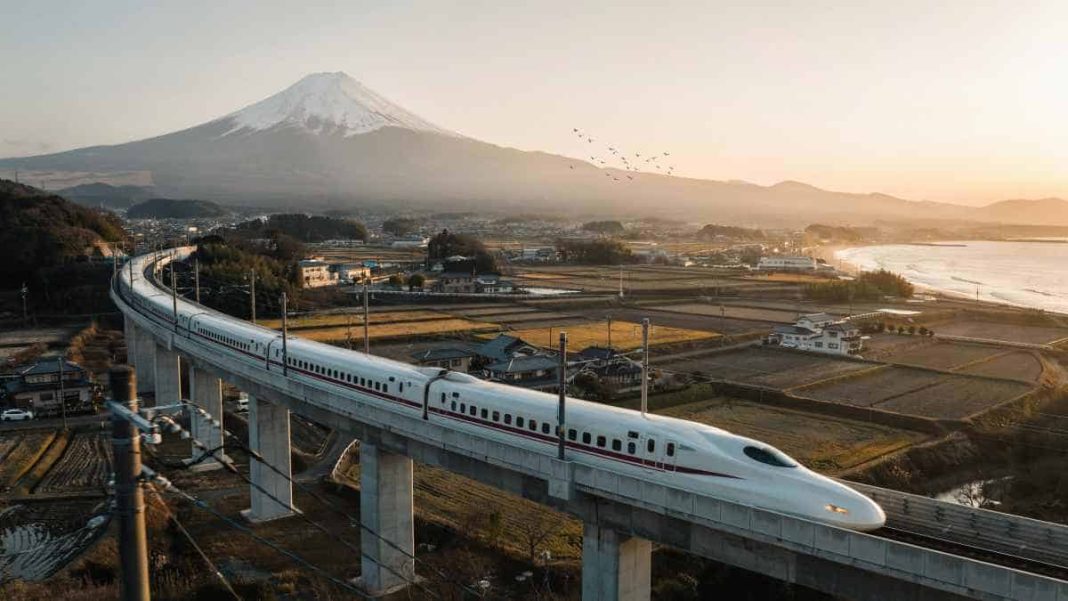
Image generated with Ai
South Korea Teams Up with Singapore, Malaysia, Japan and Others on Asia’s High-Speed Rail and Expanding New Flight Networks, Transforming Regional Tourism as Two-Week Immersive Journeys Replace Short City Breaks. Asia is entering a new phase of tourism growth as stronger international flight connectivity and expanding high-speed rail networks make travelling across the region easier than ever. With international air capacity increasing by nearly 6% year on year, visitors now have greater access to destinations across East and Southeast Asia, while modern rail systems are reducing travel times between major cities and regional attractions.
The result is a noticeable shift in travel behaviour. Instead of planning holidays around a single destination, many international visitors, particularly from the United States, are choosing longer two-week itineraries that combine several countries, cultures and experiences within one journey.
Longer Holidays Replace Quick City Breaks
Travellers are increasingly moving away from short weekend-style visits and embracing slower, more immersive holidays. A two-week itinerary allows visitors to experience the diversity of Asia by combining bustling cities, historic landmarks, mountain retreats, beaches and local communities without rushing between attractions.
For example, a traveller may begin in Tokyo, continue to Kyoto by high-speed rail, fly to Seoul, explore Bangkok, and finish with several days in Singapore or Bali. Improved transport connections make these multi-country journeys practical while offering greater flexibility.
Advertisement
Advertisement
Longer stays also encourage visitors to spend more time in local neighbourhoods, regional towns and cultural destinations rather than focusing solely on iconic landmarks.
Expanding Air Capacity Strengthens Regional Connectivity
International airlines continue restoring and expanding routes across Asia, creating more direct connections between global markets and regional tourism hubs. Additional services have improved accessibility to destinations that previously required multiple flight connections.
Advertisement
Advertisement
Major gateways, including Singapore Changi Airport, Bangkok Suvarnabhumi Airport, Tokyo Haneda Airport, Seoul Incheon International Airport, Kuala Lumpur International Airport and Hong Kong International Airport, continue handling growing passenger volumes while serving as convenient transit points for onward travel.
Singapore Changi Airport is approximately 20 kilometres from Marina Bay and is connected by the MRT system. Bangkok’s Suvarnabhumi Airport lies around 30 kilometres from the city centre, with Airport Rail Link services, while Haneda Airport is roughly 20 kilometres from central Tokyo, providing quick access by rail and road.
High-Speed Rail Makes Multi-City Travel Easier
Rail travel has become one of Asia’s strongest tourism advantages. High-speed networks allow visitors to travel comfortably between major cities without relying on domestic flights.
Japan’s Shinkansen connects Tokyo with Kyoto, Osaka, Hiroshima and other destinations in just a few hours. China’s extensive high-speed rail system links Beijing, Shanghai, Guangzhou, Shenzhen and hundreds of other cities, making regional exploration increasingly convenient.
South Korea’s KTX connects Seoul with Busan in approximately two and a half hours, while Taiwan’s High Speed Rail links Taipei and Kaohsiung along the island’s western corridor.
These efficient transport systems encourage travellers to include multiple destinations within a single holiday while reducing travel time between attractions.
Advertisement
Advertisement
East and Southeast Asia Benefit from Better Accessibility
Improved transport infrastructure is benefiting both established tourism hotspots and emerging destinations. Visitors arriving in Bangkok can easily continue to Chiang Mai or Phuket. Travellers landing in Hanoi can extend their journey to Ha Long Bay, Sa Pa or Ninh Binh, while Singapore serves as a gateway for onward travel throughout Southeast Asia.
Malaysia’s rail network also connects Kuala Lumpur with Penang, Ipoh and Johor Bahru, while Indonesia continues improving domestic aviation links connecting Bali with destinations such as Labuan Bajo, Lombok and Yogyakarta.
The combination of air and rail transport gives travellers greater freedom to customise their holidays according to personal interests and travel schedules.
Tourism Spending Expands Beyond Major Cities
Longer itineraries naturally spread tourism spending across more destinations. Hotels, restaurants, transport providers, museums, shopping centres and local attractions all benefit when visitors spend additional nights exploring regional locations.
Shopping districts such as Orchard Road in Singapore, Ginza in Tokyo, Myeongdong in Seoul and Siam in Bangkok continue attracting international visitors, while local markets, cultural villages and community-based tourism experiences are also seeing increased interest.
This wider distribution of visitors supports local economies while reducing pressure on heavily visited city centres.
Advertisement
Advertisement
Experience-Led Tourism Continues to Grow
The growing preference for immersive travel reflects a broader shift in visitor expectations. Travellers increasingly value authentic food experiences, cultural festivals, scenic rail journeys, nature-based tourism and local interactions alongside traditional sightseeing.
Instead of spending only one or two days in a destination, many visitors now dedicate several days to exploring neighbourhoods, regional attractions and nearby towns. Improved connectivity makes these extended experiences easier to plan and more accessible throughout Asia.
Country Details and Current Status
| Country | Transport Advantage | Tourism Impact |
|---|---|---|
| Japan | Shinkansen high-speed rail | Multi-city travel continues growing |
| China | Extensive high-speed rail network | Improved domestic and international connectivity |
| South Korea | KTX high-speed rail | Faster regional tourism movement |
| Thailand | Expanded international flights | Strong gateway for Southeast Asia |
| Singapore | Global aviation hub and MRT | Major transit and leisure destination |
| Malaysia | Integrated rail and aviation network | Easier regional exploration |
Key Stats
- International air capacity across Asia has increased by nearly 6% year on year.
- Two-week multi-destination holidays are becoming increasingly popular among long-haul travellers.
- Singapore Changi Airport is approximately 20 km from Marina Bay.
- Suvarnabhumi Airport is around 30 km from central Bangkok.
- Haneda Airport is roughly 20 km from central Tokyo.
- Seoul Station and Busan are connected by KTX in approximately 2.5 hours.
- Japan’s Shinkansen network links Tokyo and Kyoto in around 2 hours 15 minutes on the fastest services.
FAQ
Why are travellers staying longer in Asia?
Improved air connectivity, efficient rail networks and diverse destinations make multi-country holidays easier to plan.
Which transport options are driving tourism growth?
International flights, high-speed rail, urban metro systems and upgraded regional airports are improving accessibility.
Who is choosing longer itineraries?
Many long-haul visitors, particularly from North America and Europe, are increasingly opting for immersive two-week journeys across multiple Asian destinations.
Conclusion
South Korea Teams Up with Singapore, Malaysia, Japan and Others on Asia’s High-Speed Rail and Expanding New Flight Networks, Transforming Regional Tourism as Two-Week Immersive Journeys Replace Short City Breaks. Asia’s expanding aviation capacity and rapidly developing high-speed rail networks are redefining how visitors experience the region. With faster connections between countries, cities and regional attractions, travellers are increasingly replacing short city breaks with longer, experience-led itineraries that combine culture, nature, shopping and local discovery. As transport infrastructure continues to improve, East and Southeast Asia are strengthening their position as one of the world’s most accessible and diverse regions for multi-destination tourism.
Advertisement
Advertisement