
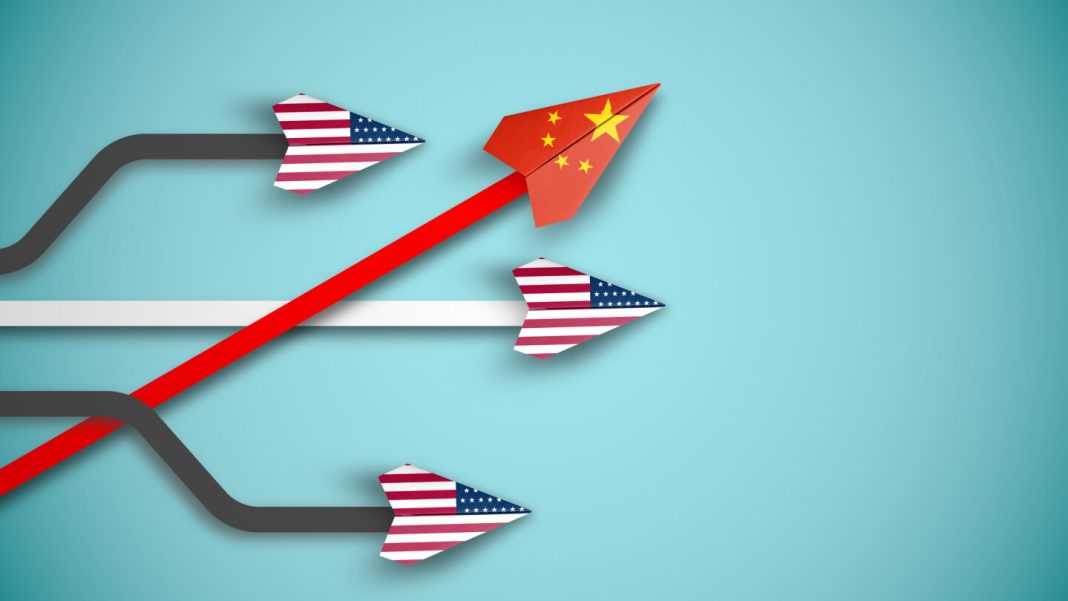

Seven years ago, Patroski Lawson was standing in an executive office of the White House with a group of biotech CEOs, Joe Rogan and then-Senior Counselor to the President Kellyanne Conway. “We gotta do something about the China problem,” Conway said with urgency.
Fast forward to October 2025. Lawson was across Washington, D.C. at an event with Sen. Bill Cassidy, R-La., who asked a room full of biotech executives what he should do first to help the U.S. fight back and prove its prowess against Chinese innovation. After complaining about the China problem to the senator, the room went silent. No one had an answer.
“It’s really easy to get my 11-year-old to explain to you why it’s raining out,” Lawson told BioSpace. “It’s raining. Well, get an umbrella, right? I mean, what is the solution to this problem?”

Lawson, founder of the biotech government affairs firm KPM Group, wants to offer a solution to the problem of the U.S.’s diminishing dominance in biomedical R&D. That’s why he has formed the American Biotech Innovation Alliance (ABIA), a new organization that intends to bring together biotech leaders to develop a concrete policy plan to bring American biotech innovation back to the fore. Originating members include Moderna, Gamida Cell, CG Oncology and more, with the tally now up to about 50 companies since the group’s early May launch.
The matter couldn’t be more urgent. At the American Society of Clinical Oncology meeting the weekend prior to Lawson’s conversation with BioSpace, many of the headlining assets were created and tested in China, then brought to American patients via partnerships with major pharmaceutical companies.
“We’re in a space race,” Lawson said. “It’s not about China. I care less about China than I care about what are we doing here in the United States to preserve science.”

From Chinese innovation to AI, biotech CEOs are being hit with challenges at a breakneck pace. Three leaders from BioSpace’s NextGen Class of 2026 told us about the issues keeping them up at night.
His sentiments echo those of biotech leaders who welcome the competition but warn that America needs to step into an offensive stance.
Write it down
China’s rise didn’t happen overnight. The government targeted the life sciences industry with one of its five-year plans, aiming to ease policy roadblocks and boost investment in the sector.
“They’ve been ruthlessly executing against that ever since,” Lawson said.
There is plenty of complaining about the rise of China as though the same couldn’t be done for the U.S. biotech industry, Lawson said. But it can—and should, he added.
This is especially important as the geography of biomedical innovation in the country is shifting. No longer is it just within the immediate radius of Boston or Silicon Valley. Texas, New Mexico, North Carolina, Utah and other locales are rising. Any new national policy needs to take into account this expansion, Lawson argues; all levels of government need to be involved for a national biotech strategy.
“Nothing’s important unless you write it down and you execute against a strategy and plan. That’s step one,” Lawson said. “We’ve never done it as a country, never needed to, necessarily. We got here just by the grace of how innovative and smart we are, but how does that propel us into the future? How does that help us in the next 50 years? It doesn’t, in my view.”

Deal dynamics between Chinese biotechs and global pharma companies are changing fast, with the biotechs seeking higher upfront payments and the Big Pharmas seeking more expansive platform deals.
After formally launching in early May, ABIA will convene a series of meetings around the country to work toward building that plan. Then, leaders will meet in Washington, D.C. to bring the cause to lawmakers.
“We’re going to focus 100% of our efforts on making sure that we don’t leave 2027 without a national strategy,” Lawson said.
The main goal is to build consensus across the biotech industry—from academics to investors to executives and beyond—rather than having disparate groups offer suggestions. That’s no small task.
Lawson likened this moment to the Civil Rights movement, which he remembers his parents participating in.
“It starts with one person. Think about Rosa Parks. . . She helped spark a movement because of her action,” Lawson said. “That’s the mindset I think we have to cultivate here. It starts with us, those of us who care about this industry.”