
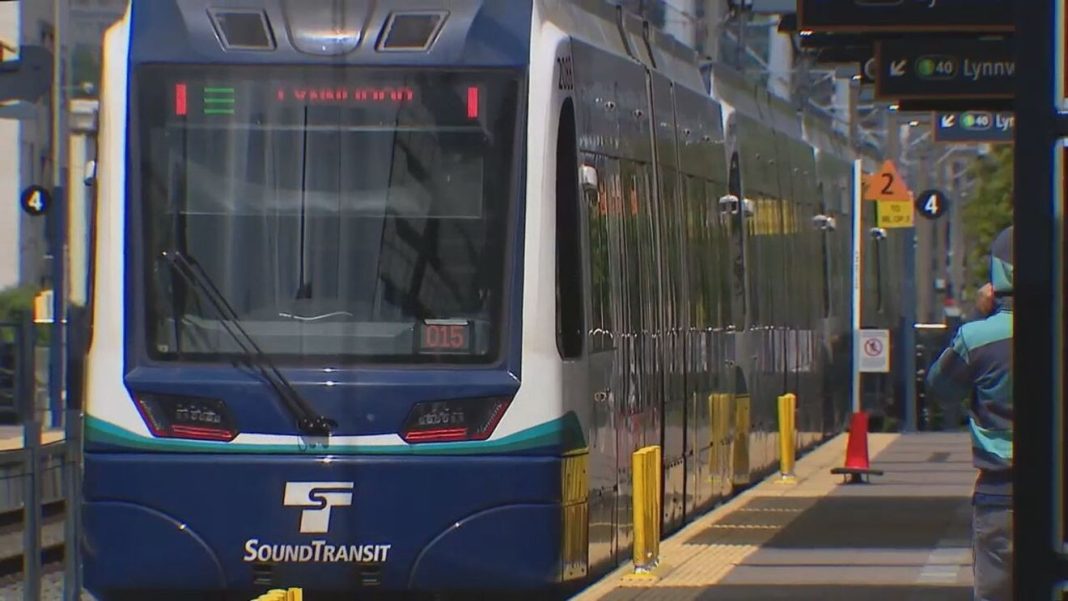

SEATTLE — The countdown is over: Sound Transit’s board has approved a long-range plan that will guide which voter-approved transit projects move forward over the next 25 years and how the agency plans to pay for them as it confronts a multibillion-dollar funding shortfall.
The board approved the plan Thursday night on a 16-2 vote, with board members Claudia Balducci and Dan Strauss casting the only votes against it.
The vote marks the culmination of Sound Transit’s yearlong Enterprise Initiative, an effort launched after agency leaders warned that inflation, rising construction costs, labor shortages and supply-chain disruptions had dramatically increased the cost of delivering the ST3 expansion package approved by voters in 2016.
Sound Transit estimates it now faces a roughly $34.5 billion funding gap over the next two decades if it attempts to build the entire ST3 system on its original schedule.
The updated system plan includes cost-cutting measures, new revenue sources and revised financial policies designed to help address that shortfall while keeping major transit projects moving forward.
RELATED | Sound Transit board to vote on major expansion plan changes amid $34.5B shortfall
Under the plan, Sound Transit will prioritize projects that are already under construction, nearing construction or can be fully funded with existing resources. Other projects will continue through planning and design while the agency pursues additional funding from federal, state and local sources. Some projects will be deferred until new funding can be identified.
Sound Transit leaders stressed that the vote does not eliminate projects included in ST3. Instead, officials described the plan as a roadmap for sequencing projects based on available funding while continuing to pursue additional revenue and cost savings.
Seattle Mayor Katie Wilson issued a statement following the vote, highlighting progress on several Seattle-area projects while expressing frustration over the future of Ballard light rail.
“When I came into office, Sound Transit was eliminating projects, searching for billions of dollars of savings, and there was not a clear to pathway to key things moving on key Seattle projects.
After six months of public mobilization and hard work by my team and many others, today we finally have a plan to deliver Graham Street, we’re moving West Seattle forward, and the development of the regional system once again has continued momentum. This is just a start, but it’s meaningful progress.
I’m frustrated and disappointed that we have not yet been able to find a way to deliver more for people in Ballard who have been paying into the program for years and not seen enough results. I’m pleased the Board adopted my amendment requiring us to consider additional options so we can find a better way forward, and I’m committed to keep doing the work to deliver what voters are demanding and build the damn trains all the way to Market Street so we can finish what we are starting here today.”

A photo of the “Build the damn trains” press rally ahead of Sound Transit’s vote on May 28, 2026. (KOMO)
Before the vote, dozens of people urged the Sound Transit Board to bring light rail access to their neighborhoods in Pierce, King and Snohomish counties as the agency weighed a plan that prioritizes some projects while delaying others.
Commuters said they want the light rail extensions they were promised when they voted for them nearly a decade ago.
“We definitely need affordable, reliable and accessible transit in the area, and we are done waiting,” one speaker said.
The comments came during public testimony from commuters, transit advocates and labor leaders at Seattle’s Union Station.
Several promised light rail stations and extensions could be delayed for years or built in phases as Sound Transit grapples with funding challenges, a possibility that has frustrated transit advocates who have been waiting for service.
Voters approved the ST3 ballot measure in 2016, authorizing the largest transit expansion in the agency’s history. The measure promised major light rail extensions to Tacoma, Everett, Ballard and West Seattle, along with Sounder, bus rapid transit and parking projects throughout the region.
Under the approved plan, the following projects are fully funded through construction:
- Tacoma Dome Access Improvements
- West Seattle Link Extension (without Avalon Station)
- Renton Transit Center Parking Garage
- Tacoma Dome Link Extension
- Everett Link Extension Phase 1
- Everett Link Extension Phase 2
- Initial Ballard Link Extension segment to Seattle Center
- TCC Tacoma Link Extension
- South Kirkland-Issaquah Link
- Link Operations and Maintenance Facility South
- Link Operations and Maintenance Facility North
- Graham Street Station
- Sounder Maintenance Base
The following projects will continue through planning and design while Sound Transit pursues additional funding:
- Ballard Link Extension final design
- Boeing Access Road Station final design
- Additional Sounder South trips
- DuPont Sounder Extension planning
- Regional Parking Fund
- ST Express Bus Base
- Future high-capacity transit corridor studies and ST4 planning
Projects requiring additional funding before construction include:
- Ballard Link Extension from Seattle Center to Market Street
- Boeing Access Road infill station
- Additional Sounder service
- DuPont Sounder Extension final design and construction
Projects deferred until additional funding is identified include:
- Tacoma Dome Link Extension parking
- Everett Link Extension parking
- Stride bus rapid transit parking
- North Sammamish Park-and-Ride
- Edmonds and Mukilteo parking and access improvements
- Bus-on-shoulder projects
- SR 162 corridor improvements
- Sounder South platform extensions
- Sounder South station access improvements
- Remaining ST Express Bus Base work
Sound Transit Board Chair and Snohomish County Executive Dave Somers described the plan as a balance between fiscal reality and the agency’s long-term commitments.
“This resolution reflects both realism and optimism — addressing today’s financial pressures while preserving our long-term commitment to delivering the regional transit system voters approved,” Somers said in a statement.
Somers said the board intends to continue pursuing additional funding sources, legislative changes and permitting reforms that could accelerate projects and restore elements of the ST3 program that are currently delayed.
Sound Transit estimates the expanded transit network could serve as many as 600,000 daily riders by 2050 and bring rail access to an additional 360,000 residents across the region.
As part of Thursday’s action, the board also directed staff to develop an adaptive program management plan and project-delivery framework by the end of 2026. Officials said the effort is intended to improve accountability, identify cost savings, provide earlier warnings about project risks and accelerate project delivery wherever possible.
Agency leaders said the work of refining the plan is far from over and emphasized that Thursday’s vote represents the beginning of a new phase in determining how to deliver as much of the ST3 vision as possible despite significant financial challenges.