

Western Australia honours its heritage and celebrates its legacies in remarkable small towns across the state. In Albany, the story of the state’s oldest European settlement unfolds at the Historic Whaling Station Museum, while nearby Torndirrup National Park highlights natural features like the Gap and Natural Bridge that have been slowly forming against the push and pull of the Southern Ocean for millennia. Broome celebrates the multicultural workers who contributed to its pearling industry in Chinatown, and visitors can also ride camels across red-sand beaches on the shores of the Indian Ocean, or search for dinosaur fossils at low tide on Gantheaume Point. These nine towns showcase some of the state’s most unique characters and events, from space debris falling on Esperance to the Mildura Shipwreck near Exmouth, and they offer the chance to experience life in Western Australia one breath at a time.
Albany

Albany is Western Australia’s oldest European settlement. Established in 1826, it has heritage buildings and a rugged coastline that give it a classic, cinematic feel. Once a major whaling port, the town has reinvented itself around conservation and storytelling. Torndirrup National Park showcases the raw power of the Southern Ocean at The Gap and Natural Bridge, while the National Anzac Centre offers a moving military history experience. Visitors can also explore the Historic Whaling Station Museum. Set on the edge of Frenchman Bay, the museum blends dramatic maritime history with immersive storytelling via short films screened inside former whale‑oil tanks, extensive exhibits of authentic tools and scrimshaw art, and the towering skeleton of a blue whale. For a bit of leisure, enjoy Middleton Beach. It’s one of the region’s most popular coastal spots, offering a five‑kilometre stretch of sand known for its safe swimming, windsurfing, and picnic spots.
Broome

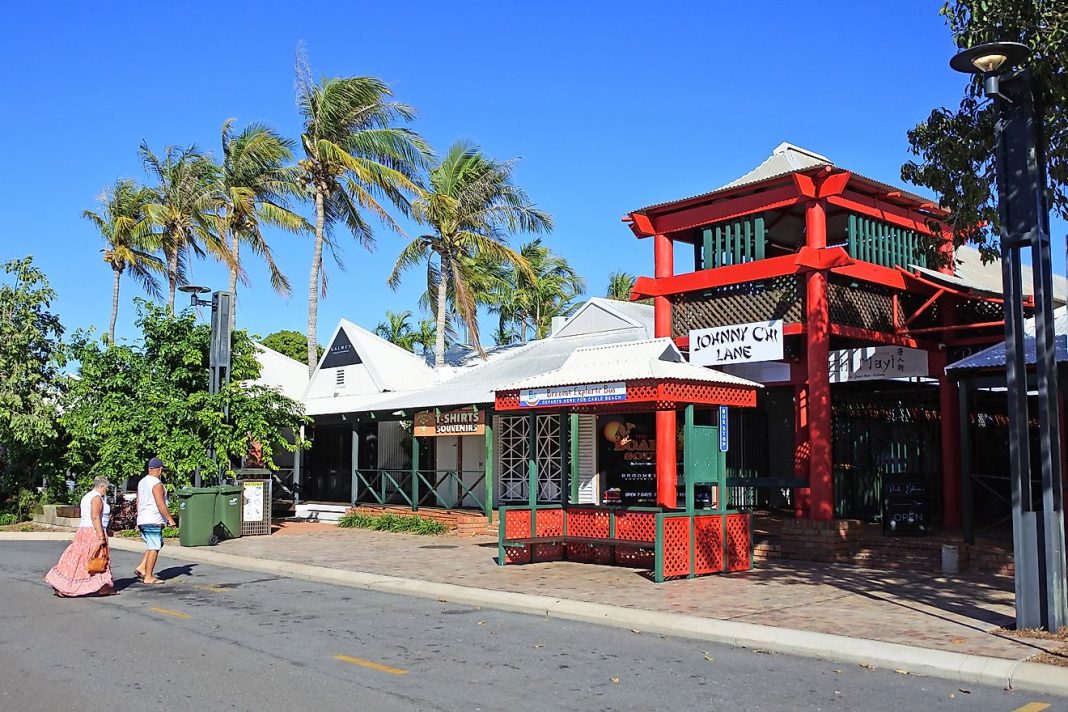
Despite its modest population of around 15,000, Broome is the largest town in the Kimberley region. The town blends Indigenous Yawuru culture with the multicultural legacy of its 19th‑century pearling boom, creating a town where its history and heritage feel alive in the streets of Chinatown and along the red‑cliff coastline. Cable Beach remains its most iconic attraction, especially at sunset when camel trains silhouette against the Indian Ocean. At Gantheaume Point, visitors can see preserved dinosaur footprints at low tide, while the pearl boutiques offer a glimpse into the industry that shaped the town. Wildlife lovers often add the nearby Malcolm Douglas Crocodile Park to their itinerary for an up‑close look at the local Kimberley fauna.
Exmouth

Exmouth was purpose‑built in the 1960s to support a joint US-Australian naval communications base, but today it is perhaps best known as the gateway to Ningaloo Reef. The town has a remote, sun‑bleached charm, with easy access to some of the clearest water in the country. Snorkelling at Turquoise Bay feels like swimming in an aquarium, and seasonal whale shark tours draw visitors from around the world. Cape Range National Park adds rugged canyons and wildlife, while the Vlamingh Head Lighthouse offers sweeping views over the reef and coastline. Lastly, visitors can see the Mildura Wreck, the ship that crashed off the North West Cape in June of 1907, as a reminder of the enduring legacy of this coastal region.
Carnarvon

Founded in 1883, Carnarvon played a surprising role in space history as part of NASA’s tracking network during the Apollo missions. The Carnarvon Space & Technology Museum tells that story with original equipment and interactive exhibits. Fed by the Gascoyne River and its underlying aquifers, Carnarvon supports intensive irrigated agriculture that has earned it a reputation as one of Western Australia’s key horticultural regions, or food bowls, while seasonal fisheries in nearby waters supply prawns, scallops, crab, and fresh fish, particularly during the cooler months. To get a slightly different perspective of the town, visitors can stroll the historic One Mile Jetty. One Mile Jetty is a striking relic of Western Australia’s maritime past, an 1898 timber boardwalk that once stretched 1.45 kilometres into the ocean, serving as the region’s vital export link for wool, livestock, and produce.
Esperance

Its name comes from the French ship Esperance, meaning “hope,” which entered Esperance Bay in 1792. Esperance was officially founded, or gazetted, in 1893 as a remote port serving pastoral stations and later became known for its dramatic coastline and famously clear waters. Visitors come for the surreal beauty of Lucky Bay in Cape Le Grand National Park, where kangaroos frolic and lounge on the sand. Another popular tourist attraction, the Great Ocean Drive, is a 40-kilometre loop lined with lookouts and turquoise bays. The route connects to other destinations, such as Twilight Beach, which offers one of the region’s most photogenic sunset spots. For history and science buffs, the Esperance Museum is well-rounded and highly regarded. Here, visitors can explore everything from vintage machinery and local heritage displays to the world’s largest public collection of NASA Skylab debris, which famously fell near Esperance in 1979.
Margaret River

Margaret River began as a timber-and-farming settlement, but since the 1960s, it has grown into one of Australia’s premier wine regions, hosting wineries such as Juniper, one of the region’s original vineyards, and the annual Cabin Fever Festival. Known for its cool‑climate varietals and laid‑back surf culture, several of the town’s surrounding wineries offer tastings and scenic meals. Surfers Point in Margaret River is one of Western Australia’s most iconic coastal lookouts, famous for its powerful Main Break surf and natural amphitheatre‑style viewing lawns. Deep beneath the karst landscape lie spectacular caves such as Mammoth Cave and Lake Cave, each with dramatic formations. Mammoth Cave is a vast, self‑guided cavern with soaring chambers, easy boardwalk access, and fossils embedded in the walls. Lake Cave, by contrast, is one of the most delicate and theatrical caves in Western Australia. It is reached by a long staircase descending into a sunken forest before opening into a crystal‑lined chamber, perfectly reflected in an underground lake.
York

York is Western Australia’s oldest inland town, less than an hour east of Perth. It was founded in 1831, and its beautifully preserved Victorian and Federation-era architecture gives it the feeling of a living museum thanks to a main street lined with heritage buildings, cafés, and antique shops that invite slow wandering. York Motor Museum is one of Western Australia’s best regional museums, showcasing more than a century of motoring history inside a beautifully preserved 1908 building. It’s home to over 60 vintage, classic, and rare vehicles, and motoring memorabilia, curated to tell the story of Australia’s automotive evolution.
Mount Brown Lookout is a classic viewpoint and an easy five‑minute drive from town that rewards you with sweeping 360‑degree views over the Avon Valley, rolling farmland, and the historic township below. It sits 342 metres above sea level and is accessible by both car and foot, making it a favourite spot for sunsets, photography, and picnics.
Denmark

Denmark, Australia, not to be confused with the country in Europe, is a quiet place with forests and coastal granite formations that give it a dreamy, slow‑paced vibe. It was established in the late 1800s as a timber mill town and later evolved into an arts‑focused community surrounded by lush farmland. The beaches at Greens Pool and Elephant Rocks are among the most photographed in Western Australia, thanks to their sheltered turquoise water and sculpted boulders. A short drive away, the Valley of the Giants Tree Top Walk lets visitors wander through towering tingle forests, and on the way back to Denmark, local cellar doors, including The Lake House, offer a relaxed taste of the region. Meanwhile, downtown studios and shops such as Riverfront Gallery feature local art and handmade gifts.
Bridgetown

Bridgetown’s rolling hills, orchards, and heritage buildings make it one of the most nostalgic towns in the southwest. It was established in the 1860s as a farming and timber community, and is now a creative hub known for its festivals and creative flair. The Bridgetown-Greenbushes Art Trail is a colourful, ever‑growing outdoor gallery that winds for about four kilometres through the heart of Bridgetown, showcasing murals, sculptures, and public artworks created by local and commissioned artists.
Bridgetown is also known as the Winter Capital of Western Australia, and it celebrates this title with a three-month celebration called Fridgetown Fest each year, in which local businesses present a wide range of special offerings and family-friendly events to ward off the cold. In summer, the Blackwood River is one of Western Australia’s defining waterways, a long, looping stretch that winds through forests and farmland, and visitors to Bridgetown can explore it by kayak or enjoy a picnic on the riverbank.
Where Western Australia Still Moves to Its Own Rhythm
Each place in this list preserves something essential, such as heritage streetscapes, unspoiled coastlines, deep‑rooted communities, or landscapes that feel unchanged for generations. These towns are defined by isolation, in some cases, heritage streetscapes, and a gentle rhythm. From Esperance’s glowing beaches to York’s Victorian main street, these destinations offer continuity and character, and together, they form a map of Western Australia where authenticity comes naturally.