
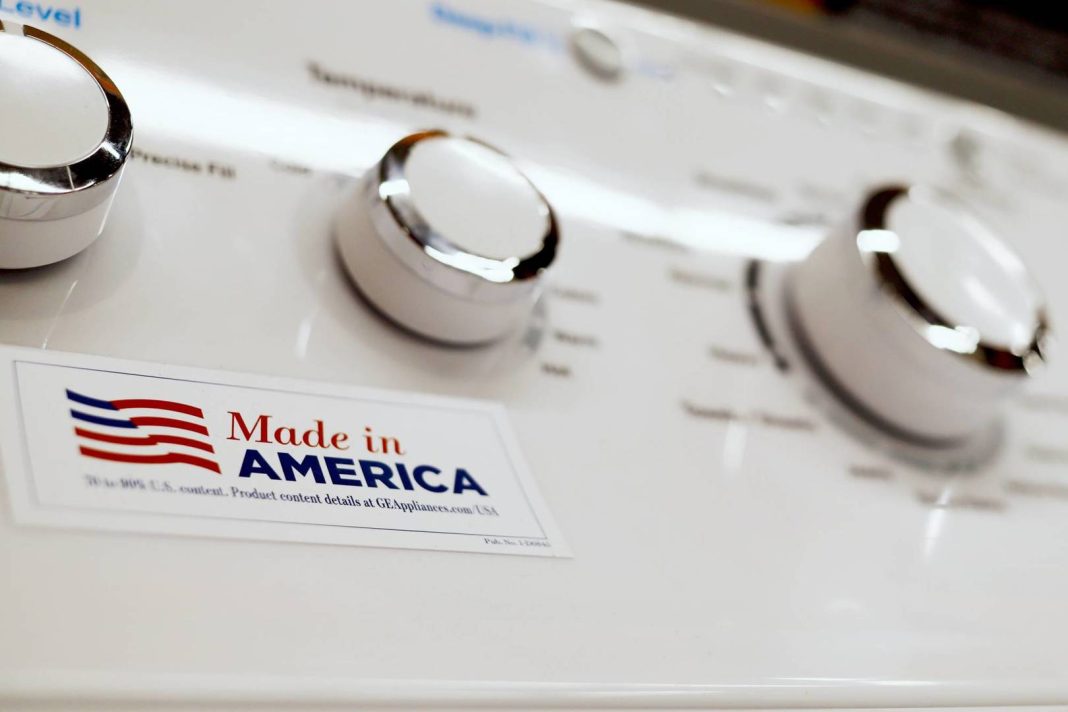

Business executives and their legal counsel have a common, yet avoidable, problem: Companies treat domestic-content compliance for federal work as permission to brand products as Made in USA, and recycle marketing claims into bid packages as shorthand for procurement eligibility. Those shortcuts are where risk starts, because “Buy American” and “Made in USA” are different legal regimes with different tests, owners and enforcement pathways.
In the wake of President Donald Trump’s March 13 executive order, Ensuring Truthful Advertising of Products Claiming to be Made in America, companies must remain vigilant and ensure that their business and legal teams are aligned on American-origin claims, lest a company’s marketing claims land them in the government’s crosshairs.
The dividing line
Made in USA is a consumer-protection and advertising-substantiation regime enforced by the Federal Trade Commission (FTC) under Section 5 of its Made in USA Labeling Rule. The FTC’s unqualified standard is “all or virtually all” of a product with this label is made in the United States, and the FTC has emphasized that civil penalties can apply for improper unqualified Made in USA labels, including in catalogs or online marketing.
Buy American is a federal procurement domestic preference regime implemented through the Federal Acquisition Regulation (FAR) and associated agency regulations; in particular, Buy American procedures and requirements can be found in FAR Part 25 and clauses like FAR 52.225-1, Buy American — Supplies. In that clause, a contractor with the federal government is required to deliver only “domestic end products,” except where foreign end products are identified under the solicitation’s certification mechanics. A “domestic end product” for Buy American purposes requires a product be both manufactured in the U.S. and meet a certain domestic content threshold: for products that do not consist wholly or predominantly of iron or steel or a combination of both, the cost of that item’s components mined, produced or manufactured in the U.S. must exceed 65% (for items delivered through calendar year 2028).
In short, one regime governs what can be credibly said to the public; the other governs what the government will accept in a procurement context. Due to the different regulatory regimes, something that complies with Buy American requirements may not met the FTC “all or virtually all” standard. Similarly, something that is Made in USA may meet Buy American requirements, but could invite confusion if improperly referenced in procurements seeking “domestic end products.”
Why businesses conflate the regimes
Conflation usually comes from organizational convenience, not legal misunderstanding:
- The government-sales team wants a simple marketing line for capture decks.
- Marketing wants a procurement-safe proof point for product pages.
- Supply chain changes faster than either group updates representations.
- Documentation sits in different systems, owned by distinct functions.
The result is a single domestic-content narrative that does two jobs, and therein lies the problem.
The two most common failure modes
- Procurement-compliant, marketing-risky
A product can satisfy a procurement clause’s definition of domestic end product or qualify for a preference while still failing the FTC’s “all or virtually all” standard for an unqualified Made in USA claim. The legal tests are not interchangeable, and the FTC treats unqualified claims as high-confidence representations requiring strong substantiation. - Marketing-credible, procurement-risky
A company can be conservative in consumer marketing while still misapplying procurement rules because the operative test depends on the clause, the solicitation’s certifications, exceptions, and how the agency implements domestic-preference requirements. FAR policy is clause-driven and contract-specific.
Where GovCon risk concentrates
For government contractors, the bigger risk often comes from inconsistent or inaccurate representations to the government rather than a single statement. Typical pressure points:
- Certification drift: Marketing language is pasted into bid materials without confirming the specific FAR clause and solicitation certification mechanics.
- Supply-chain change management: Component sourcing shifts mid-performance, but product literature, invoices or deliverables keep legacy domestic-origin language.
- Flow-down and subcontract documentation: Primes and subs do not share a common view of what counts as domestic for the relevant clause, and the paperwork does not reconcile.
These are the kinds of fact patterns that generate performance disputes, bid issues and potential False Claims Act liability when representations are incorporated by reference into contract deliverables. FAR 52.225-1’s deliver-only-domestic framing is a useful reminder that, in many procurements, the default expectation is domestic end products unless the offeror specifically identifies foreign end products during the solicitation process.
Where consumer-protection risk concentrates
For consumer-facing companies, explicit Made in USA labeling is not the only risk. The FTC’s rule defines the category broadly to include unqualified representations, express or implied, and FTC guidance underscores the exposure for unqualified claims that are not supported by all or virtually all substantiation.
Two additional accelerants matter:
- The FTC treats online claims as real-world labels for enforcement purposes, so a product page can create the same risk profile as packaging.
- Private litigation and competitor challenges tend to rise when regulators emphasize the issue.
Why 2026 may bring more heat
On Jan. 13, Trump nominated David MacNeil, founder of WeatherTech and a supporter of pro-American manufacturing, to serve as FTC commissioner. The nomination is formally pending in the Senate.
Whatever the confirmation outcome, the nomination is relevant for compliance teams because it amplifies an American-made narrative that can blur distinctions between procurement domestic preference and consumer-facing origin advertising. The FTC does not write the FAR, and it does not administer domestic-preference waivers in procurement, but commissioners can influence enforcement salience, messaging and where the agency devotes attention. That environment increases the odds that companies treat Buy American eligibility as brand permission or treat Made in USA branding as procurement eligibility, and both translations are error-prone.
President Trump amplified the criticality of accurate “Made in America” and “Buy American” claims in his March 13 EO. In the EO, President Trump directs the FTC to prioritize enforcement actions in which a manufacturer’s “Made in America” claims amount to a violation of law. The EO also puts online marketplaces on notice of their responsibility to verify “Made in America” claims, and requires the FTC to consider issuing proposed regulations that would deem a failure to establish procedures verifying country or origin claims to be an unfair or deceptive act or practice under the Federal Trade Commission Act.
On the Buy American side, the EO instructs agencies overseeing government-wide acquisition contracts, Multiple Award Schedule contracts, or any other government-wide indefinite delivery, indefinite-quantity contracts to periodically review and verify American-origin claims, which would include references to “Buy American” and “Made in America.” The penalties for misrepresentation will be severe, as agencies are instructed to remove any offending products from government procurement availability, and refer vendors to the Justice Department for potential False Claims Act action. While the EO does not change the existing Made in America and Buy American rules, it highlights the Trump administration’s enhanced focus on domestic origin claims, and the heightened risk for entities that misrepresent products as domestic. Companies must be fully versed in and compliant with the relevant standard before making any American-origin claims.
A practical governance fix: Build two files, not one story
Companies that sell to the government and to consumers should treat domestic origin claims as controlled statements with two parallel compliance tracks:
- Procurement file: Includes clause and solicitation mapping; product categorization; supply-chain support; flow-down controls; and a refresh cadence tied to sourcing changes and proposal reuse.
- Origin claims file: Includes a claims inventory (unqualified vs. qualified); substantiation aligned to the FTC standard; approved qualifiers; training in marketing and sales; and monitoring for marketplace and reseller claims.
The takeaway is simple: Do not let one American-made message do two jobs. Use procurement documentation to satisfy procurement clauses and use FTC standards to support consumer-facing origin advertising. It’s possible to do both when needed, but only by treating them as two separate compliance problems that happen to share similar slogans.
Companies should expect that, in light of President Trump’s new EO, the government will be proactively tracking the veracity of these claims. Smart companies will prepare by auditing their own marketing claims and their supply chains to verify compliance with the relevant standards and ensure they don’t end up the subject of the next headline on false American-origin claims.
Cara A. Wulf is a government contracts partner with McCarter & English.
Copyright
© 2026 Federal News Network. All rights reserved. This website is not intended for users located within the European Economic Area.